
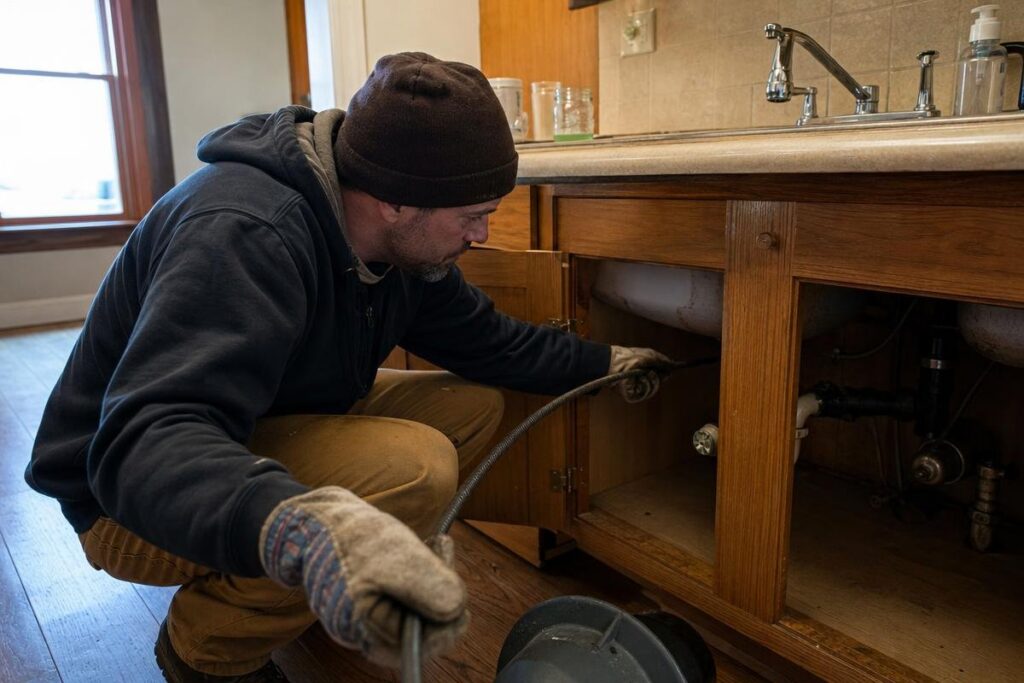
Your drains don’t care how old your house is, but St. Paul’s older homes sure make clogs worse. Cast iron lines, clay laterals, and hard Mississippi River water all work against you over time. Knowing the right drain cleaning methods, and when to use each one, can save you from a backed-up sink turning into a full sewer problem.
McQuillan Home Services LLC has been clearing drains across the Twin Cities, and what follows covers exactly what works, what doesn’t, and when to call a pro. Got a slow or blocked drain? Our team is available 24/7 for drain service in St. Paul.
Key Takeaways
- There are five main drain cleaning methods, and the right one depends on your clog type and pipe material.
- Hydro jetting is the most thorough option for grease buildup and mineral scale in older St. Paul drain lines.
- Chemical drain cleaners can damage aging cast iron and clay pipes, making them a risky DIY choice in pre-1970 homes.
- Drain snaking works well for soft clogs but won’t clear hardened scale or root intrusion the way professional methods can.
- Regular drain maintenance prevents small slowdowns from becoming costly sewer line repairs.
What St. Paul Homeowners Are Dealing With
Slow drains are one of the most common plumbing calls we get from homeowners in Hamline-Midway, Cathedral Hill, and the West Side. Most of those homes were built before 1970. That means cast iron drain lines and clay sewer laterals that have been collecting grease, mineral scale, and invasive roots for decades.
The wrong drain cleaning method can make things worse. Below we cover five methods, how each one works, and when to stop DIYing and call a licensed plumber. If you want a quick overview first, check out our post on how to unclog a drain in your St. Paul home.
Why the Right Drain Cleaning Method Actually Matters
Not every clog is the same. And not every drain cleaning method works on every pipe. Use the wrong one and you can turn a slow drain into a cracked line or a collapsed lateral. That’s especially true in older Twin Cities neighborhoods where the plumbing hasn’t been touched in decades.
How St. Paul’s Older Pipes Change the Equation
Homes in Frogtown, Summit-University, and the West Side were largely built before 1970. Many still have cast iron drain lines inside and clay sewer laterals running to the street. Both materials are brittle compared to modern PVC.
Chemical drain cleaners are a real problem in these homes. Products built on sodium hydroxide or sulfuric acid eat away at cast iron pipe walls over time. One bottle won’t destroy your pipes, but repeated use will accelerate corrosion. Mechanical snaking carries its own risk on clay pipe. A snake can catch on deteriorating joints and make existing damage worse.
Knowing what’s in your walls changes which method makes sense. If your home sits in a neighborhood with heavy pre-1970 housing stock, professional drain cleaning isn’t just a convenience. It’s the safer call. Mature elm and oak trees near older clay laterals also mean root intrusion is a real and common threat.
When a Slow Drain Signals Something Bigger
A single slow sink usually means a surface clog. Hair, grease, soap buildup. That’s manageable. But certain symptoms point to something deeper in your main line.
- Multiple fixtures draining slowly at the same time
- Gurgling sounds from toilets or floor drains
- Sewage odors coming up through drains
- Water backing up in one fixture when you use another
These are main line warning signs, not surface clogs. A store-bought solution won’t reach the problem. Ignoring these symptoms can also show up as low water pressure in your home or worse, a sewage backup. Drain cleaning in this situation requires professional diagnosis first.
What Are the 5 Main Drain Cleaning Methods?
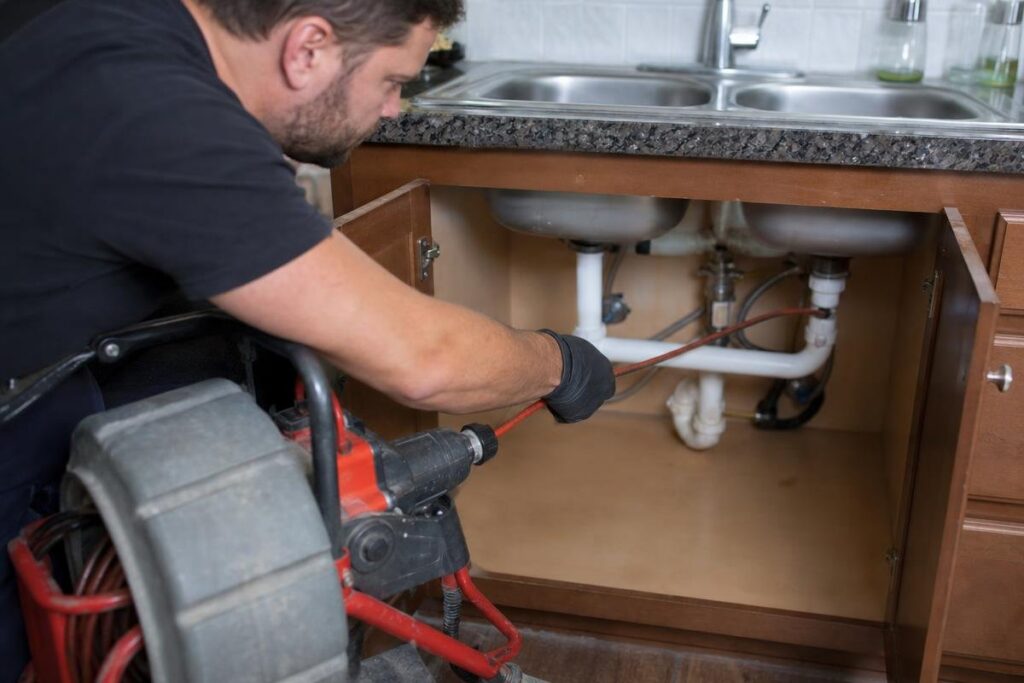
The five main drain cleaning methods are hand augering, motorized augering, hydro jetting, chemical cleaners, and drain rodding, and the right one depends on your clog type and pipe material. Using the wrong drain cleaning method can leave the problem half-solved, or worse, damage older pipes. Here is a plain breakdown of each method, what it does, and where it works best.
Method 1: Drain Snaking (Hand Auger)
A hand auger is a hand-cranked corkscrew cable, typically reaching 15 to 25 feet into a pipe. You feed it in, crank it through the clog, and pull the obstruction back out. It works well on hair clogs and surface blockages in bathroom sinks and tubs. The limitation is real: it punches a hole through the clog but does not clean the pipe walls. Buildup stays behind. If you want to know how to unclog a drain in your home, a hand auger is often the right starting point for minor clogs.
Method 2: Motorized Drain Auger
A motorized auger runs the same basic cable concept, but a power drive pushes it 50 to 100 feet at much higher torque. That extra reach handles toilet clogs and deeper kitchen line blockages that a hand auger cannot touch. One caution: used aggressively, a motorized auger can score or crack old cast iron pipe walls. Homes in Hamline-Midway and Frogtown with pre-1970 cast iron lines need a careful hand on the throttle. This is a tool best left to someone who runs it regularly.
Method 3: Hydro Jetting
Hydro jetting pushes water through a specialized nozzle at 1,500 to 4,000 PSI. That pressure scours grease, mineral scale, and debris off pipe walls, not just through the clog. It is the most thorough drain cleaning method available for main sewer lines and kitchen lines with heavy grease buildup.
Because St. Paul’s Mississippi River water is moderately hard, mineral scale coats the inside of these lines faster here than in soft-water markets, and that scale is exactly what a snake skims past but hydro jetting strips away. That is the main reason jetting outperforms snaking on local cast iron lines.
There is one non-negotiable step before hydro jetting: a camera inspection. Cracked clay laterals are common in older Dayton’s Bluff and Payne-Phalen neighborhoods. High-pressure water can turn a hairline crack into a full break. A camera confirms the pipe can handle it. That is the key difference in the drain snaking vs hydro jetting decision: snaking dislodges, hydro jetting cleans.
For root intrusion in sewer lines, a camera inspection is the necessary first step before any treatment. Not sure what’s inside your pipes? A quick camera inspection tells you before any method touches the line.
Method 4: Chemical Drain Cleaners
Store-bought chemical cleaners use sodium hydroxide or sulfuric acid to dissolve organic clogs like hair and soap scum. They work on fresh, soft clogs in newer PVC pipes. They do not work on grease buildup or solid obstructions, and they are genuinely dangerous on cast iron and older metal pipes. If your home was built before 1970 and still has original drain lines, skip the bottle. The acid accelerates corrosion on metal pipes that are already decades old.
A quick note on baking soda and vinegar: it is a maintenance rinse, not a real cleaning method. It will not clear a blocked drain, and it can help with minor odors and light residue between professional cleanings. In St. Paul specifically, our hard Mississippi River water works against it.
Once mineral scale builds up inside a line, a mild acid-base reaction like baking soda and vinegar cannot break through it, and enzymatic maintenance treatments lose much of their punch too. That is why home rinses do less here than they might in a soft-water city.
Method 5: Drain Rodding
Drain rodding uses rigid or semi-rigid rod sections screwed together and pushed through a drain run. It is better suited to short, straight runs like floor drains in laundry rooms or outdoor area drains. You will not see it used often in residential bathroom or kitchen lines because the rigid rods do not navigate curves well. For floor drains in older North End or Thomas-Dale homes that back up seasonally, rodding is a practical, low-cost option when the run is short and straight.
DIY Drain Cleaning vs. Calling a Professional: Where’s the Line?
You can handle some clogs yourself. Others need a licensed plumber with the right tools. Knowing the difference saves you time, money, and a flooded bathroom floor. For a closer look at basic DIY options, see our guide on how to unclog a drain in your St. Paul home.
Clogs You Can Tackle Yourself
These situations are reasonable DIY territory for most homeowners:
- A single slow bathroom sink with hair caught near the stopper
- A tub drain you can reach with a hand auger or drain snake
- A mildly slow kitchen drain that responds to an enzyme cleaner or motorized auger
Always keep a bucket and dry towels nearby. Water backup during DIY drain work can damage floors fast, especially in older homes with wood subfloors.
Clogs That Need a Licensed Plumber
Some symptoms point to a main line problem or a pipe condition that DIY tools can make worse. Call our team when you see any of these:
- Multiple drains backing up at the same time
- Sewage smell from a floor drain or basement fixture
- A drain that re-clogs within a few days of clearing
- Water backing up into the tub when you flush the toilet
- A home built before 1970 with suspected root intrusion in clay laterals
Homes in Hamline-Midway, Frogtown, and Dayton’s Bluff often have cast iron drain lines and clay sewer laterals. Running a DIY snake or pouring chemical cleaner into those pipes can crack brittle joints or push a blockage deeper. Professional drain cleaning with a camera inspection finds the real problem before it gets worse.
If a backup cannot wait, we offer 24/7 emergency service. Winter drain emergencies in Minnesota do not keep business hours, and neither do we. Need it handled today? Get a same-day drain cleaning quote and a straight answer on what your line needs.
How McQuillan Home Services LLC Approaches Drain Cleaning in St. Paul
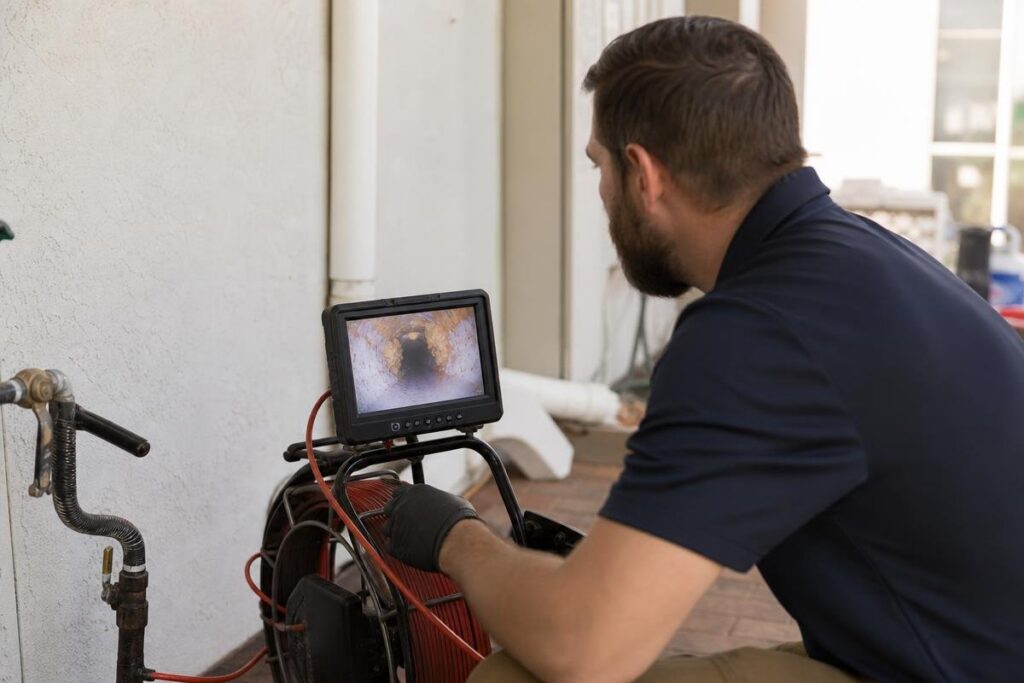
We don’t guess. Before recommending hydro jetting or motorized augering on a main line clog, our team runs a sewer camera inspection first. That step matters most in older Twin Cities neighborhoods like Cathedral Hill, Summit-University, and the West Side, where clay laterals and cast iron lines are still common. Sending high-pressure water into a cracked pipe makes the problem worse, not better.
Camera Inspection First, Then the Right Method
The camera tells us what we’re actually dealing with. Grease buildup, root intrusion, a collapsed section, and a simple clog all look different and require different fixes. Once we know the cause, we match the method. That might be drain clearing, rooter service, or hydro jetting, depending on what the camera shows. Root intrusion is one of the most common findings in older St. Paul sewer lines, and it almost always requires a camera inspection before any treatment.
Our team is based at 1727 MN-36, St Paul, MN 55109, right in the city we serve. We offer 24/7 emergency service, so if a drain backs up at midnight in the North End or the West Side, we can get there.
What Our Customers Say About Our Plumbing Work
Across over 5,000 reviews, our average rating is 4.6 stars. The themes that come up most often are consistent: technicians show up prepared, explain the work clearly before starting, and arrive with an honest estimate. Customers in Maplewood, Roseville, and Woodbury mention the same things: professional and thorough, no surprises on the bill.
That kind of feedback reflects how we train our plumbers. Explain first, then fix it right.
Drain Cleaning in St. Paul: What Local Conditions Mean for Your Pipes
Hard Water, Cold Winters, and Aging Infrastructure
Saint Paul Regional Water Services pulls from the Mississippi River. That water is moderately hard, which means mineral deposits build up inside your drain lines over time. Scale narrows pipe diameter slowly, and once grease or soap hits a scaled-up pipe, clogs form faster and come back sooner.
Minnesota winters make things worse. Pipe joints in uninsulated crawl spaces and exterior walls take a beating every time temps drop below zero. Older homes in Summit Hill, Macalester-Groveland, and zip codes like 55104 and 55117 already have aging cast iron lines.
Freeze-thaw cycles stress those joints further. If you’re noticing slow drains plus low water pressure in your home, mineral scale is often part of the picture. You can also check out 9 signs your home has hard water to know what to look for.
Sewer Line Concerns in St. Paul’s Established Neighborhoods
Homes in Summit Hill, Macalester-Groveland, and the North End area were largely built between the early 1900s and the 1950s. Most of those properties still have original clay tile sewer laterals. Clay tile works fine until it cracks or separates. Then roots move in.
Mature elm and oak trees are everywhere in these older districts. Their roots follow moisture straight into cracked clay joints. Once roots take hold, a standard kitchen snake will not fix the problem. That kind of blockage needs a camera inspection first, then rooter service or a full lateral repair depending on what the camera shows.
The bottom line: the method that clears a bathroom drain clog is not the same one that handles a root-infiltrated lateral. Hydro jetting St. Paul sewer lines and clearing a surface drain in the Twin Cities are two different scopes of work. Knowing which one your home actually needs saves you time and money.
Frequently Asked Questions
What is the most effective drain cleaning method?
It depends on the clog. For a surface-level blockage, a motorized auger clears it fast. For grease buildup, mineral scale, or a sewer line that needs prep before lining repair, hydro jetting is the more thorough choice. It pushes 1,500 to 4,000 PSI of water through the pipe and scrubs the walls clean. We always run a camera inspection first so we know which method actually fits your situation.
Are chemical drain cleaners safe to use?
Not always. In homes built before 1970, chemical cleaners can accelerate corrosion in cast iron pipe and break down older rubber gaskets. A lot of homes in Summit Hill, Macalester-Groveland, and the zip 55117 corridor fall into that category. If your home has older cast iron lines, talk to a plumber before reaching for a bottle. Safer methods exist that do not risk pipe damage, especially in older homes with cast iron lines.
How often should I have my drains professionally cleaned?
Most homes do well on an 18 to 24 month schedule. If you have clay sewer laterals, large elm or oak trees near your line, or a drain that clogs repeatedly, annual service makes more sense. Root intrusion in clay laterals is common in older Twin Cities neighborhoods. Our team can walk you through what tree roots do to sewer lines and what your options are.
How do I know if my main sewer line is clogged?
Watch for multiple drains backing up at the same time. Also look for water rising through a floor drain when you flush a toilet, or a persistent sewage smell in the basement. Those are sewer line signals, not just a single slow drain. Call a plumber right away when you see more than one of these together.
Does McQuillan Home Services LLC offer emergency drain cleaning?
Yes. Our team is available around the clock for drain emergencies that cannot wait. Got a slow drain or a backup that keeps coming back? We serve the Twin Cities metro with drain clearing, rooter service, and hydro jetting. We run a camera inspection first so the right method gets matched to your actual problem. Reach us any time online or stop by our office at 1727 MN-36, St Paul, MN 55109.
Ready to Get Started with McQuillan Home Services LLC?
Get in touch to speak with our team directly. We’re ready to answer your questions, walk you through your options, and help you find the right solution for your needs. Whether you’re just starting to plan or ready to move forward, we’ll make the process simple and stress-free. Reach out today and let’s talk about how we can help.