
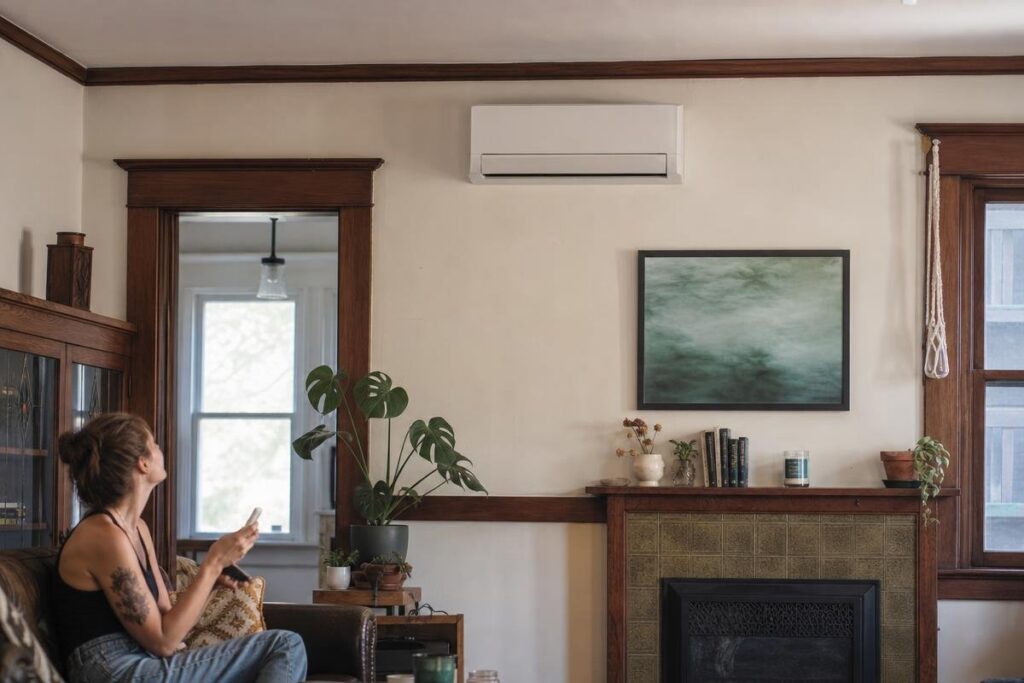
Your St. Paul home was built for a Minnesota winter, not a July heat wave. If you have a steam radiator or hot-water boiler and zero ductwork, adding central air is often more trouble than it’s worth. A ductless air conditioner gives you real cooling without tearing into your walls or floors. We’ve been helping Twin Cities homeowners solve exactly this problem since 1883, and our licensed technicians have installed these systems in hundreds of pre-1950 homes across the city, so we know which options actually hold up in older construction like yours.
Ready to cool your home this summer without the ductwork headache?
Key Takeaways
- A ductless air conditioner works in older St. Paul homes without requiring any new ductwork or major renovation.
- Xcel Energy may offer rebates on qualifying cold-climate heat pump mini splits. Check current eligibility and rebate amounts directly with the utility before making a purchase.
- The City of St. Paul requires mechanical and electrical permits for mini split installs, so always use a licensed contractor.
- Single-zone and multi-zone mini split systems are the most common ductless cooling options for older homes with multiple rooms.
- Brands like Mitsubishi, Fujitsu, and Daikin offer units sized for the smaller rooms common in pre-1950 St. Paul homes.
How Does a Ductless Air Conditioner Actually Work?
A ductless mini split is a two-part system: an outdoor unit housing the compressor and condenser, and one or more indoor air handlers mounted on your walls or ceiling, connected through a small 3-inch hole in your exterior wall.
Inside that 3-inch opening, you have refrigerant lines, a power cable, and a condensate drain line. That is it. No duct chases. No dropped ceilings. No tearing into original plaster. The hole can be patched cleanly if you ever remove the system, which matters a lot to homeowners in Cathedral Hill or Dayton’s Bluff who want to protect original exterior details.
The Outdoor Unit and Indoor Air Handler
The outdoor unit compresses refrigerant and sends it inside through those lines. The indoor air handler receives that refrigerant, conditions the air around it, and fans cooled air directly into your room. There is no middle step. No duct network carrying air from one end of the house to the other, losing efficiency along the way.
One outdoor unit can connect to multiple indoor air handlers. That means you can cool different rooms independently, each at its own temperature.
Why No Ductwork Is Needed
Your home probably has no ductwork because it was built with steam radiators or a hot-water boiler. That was the standard in Minnesota construction before the 1950s. Craftsman bungalows, Victorian two-stories, brick Tudor and colonial-style homes, none of them had duct chases built in. Adding central air would mean tearing through plaster walls and ceilings. A ductless HVAC system in Minnesota skips that entirely.
Heating and Cooling in One System
Most ductless mini splits are heat pumps. That means they heat and cool in one unit. Cold-climate models are rated to operate at minus 13°F or lower, which covers most of what a Minnesota shoulder season throws at you.
That said, most homeowners keep their boiler or furnace as the primary heat source for deep-winter stretches. The mini split handles all your summer cooling without requiring ductwork, and takes the edge off in spring and fall without firing up the boiler.
The 5 Ductless Cooling Options for St. Paul Homes Without Ductwork
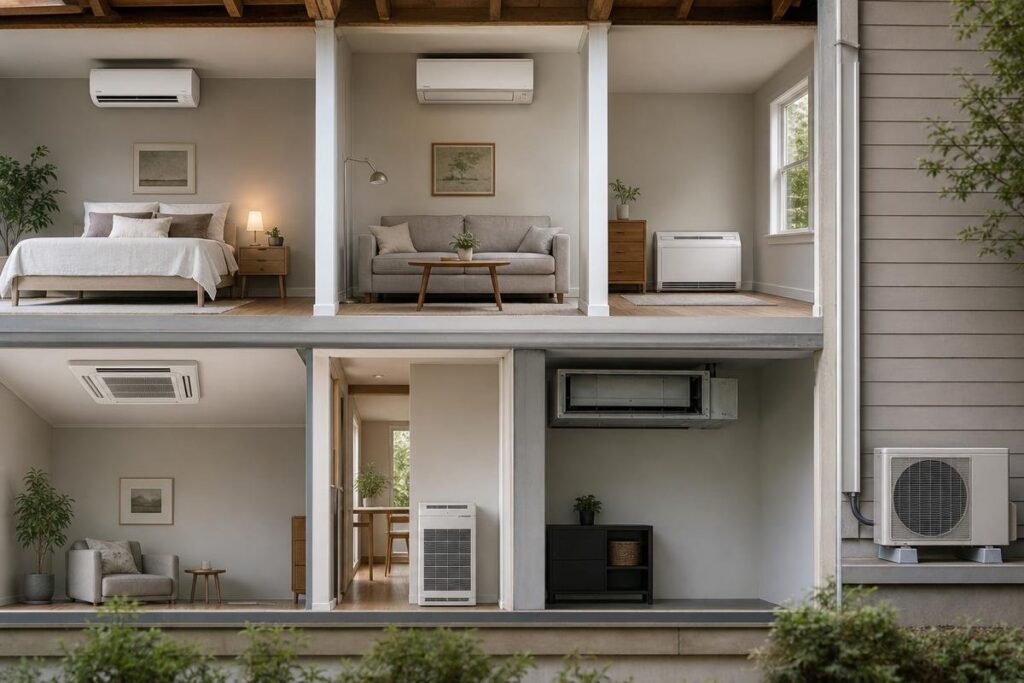
Not every ductless system fits every home. A finished attic in a Macalester-Groveland bungalow has different needs than an open-plan addition off a Cathedral Hill Victorian. Here is a plain breakdown of each option, what it costs, and where it works best. In St. Paul, older plaster walls and limited attic access can affect installation scope compared to newer construction, something to factor into your planning.
Option 1: Single-Zone Wall-Mounted Mini Split
This is the most common starting point. One outdoor compressor connects to one wall-mounted air handler inside. Pricing varies based on the unit and access conditions.
It works well for a sunroom addition, a finished attic, or a home office that your existing system never quite reached. Brands like Mitsubishi, Fujitsu, and Daikin all make reliable units in this category. If you install a qualifying cold-climate heat pump mini split, check Xcel Energy’s current program for eligibility and rebate amounts before you buy.
Option 2: Multi-Zone Mini Split System
One outdoor unit connects to two, three, or four indoor air handlers placed in different rooms or on different floors. Pricing varies based on the number of zones and installation complexity.
This is the go-to choice for whole-home cooling in a two-story home where adding ductwork is not practical. Each zone gets its own thermostat control, so you are not cooling empty rooms. For more on how independent room control works, our overview of HVAC zoning systems for St. Paul homes is a good read.
Option 3: Ceiling Cassette Mini Split
The air handler mounts flush in the ceiling and pushes conditioned air in four directions at once. You see only a trim panel from below.
This is a strong fit for open-plan spaces, a great room, or a finished basement where a wall-mounted unit would look out of place. You do need ceiling access above the installation point, which is worth confirming before you commit.
Option 4: Floor-Mounted Air Handler
This unit sits low on the wall, close to the floor, similar in profile to a baseboard heater. It does not need significant wall space above the unit.
Older Como and Merriam Park homes often have tall double-hung windows that run nearly floor to ceiling, leaving almost no usable wall space for a standard wall-mount. A floor-mounted handler solves that problem directly. It is one of the most practical options for pre-1950 construction.
Option 5: Concealed Duct Mini Split (Short-Run)
The air handler hides inside a wall cavity, a closet, or a dropped soffit. Short duct runs of roughly 10 to 25 feet connect it to one or two supply registers in the room.
This is a middle-ground option. You get the clean look of a register in the ceiling or wall without the cost of a full duct system retrofit. It works well when you want the output to feel more like central air. For a similar concept with even more flexibility, read our overview of high-velocity HVAC systems.
Get a free quote for your older St. Paul home and let us match the right ductless system to your layout and budget.
How Efficient Are Ductless Mini Splits Compared to Central Air?
Mini splits win this comparison by a wide margin, and the numbers are worth understanding before you decide. A ductless HVAC system in Minnesota can deliver two to three times the cooling efficiency of an older central air setup, which shows up directly on your electric bill every summer.
Understanding SEER2 Ratings
SEER2 stands for Seasonal Energy Efficiency Ratio 2. Think of it like miles per gallon for your cooling system. The higher the number, the less electricity it burns to keep your home comfortable on a hot July afternoon in Highland Park or Summit Hill.
Most ductless mini splits carry SEER2 ratings between 18 and 30. A central air system installed in the 1990s might rate as low as 8 to 10. That gap translates directly to lower monthly bills. Federal minimum efficiency standards for the North-Central region, including Minnesota, were updated in 2023. You can read the full breakdown in our post on how the 2023 HVAC regulations affect homeowners.
Why Duct Loss Makes Central Air Less Efficient Than It Looks
Even a newer central air system with a decent efficiency rating can underperform badly in older homes. The U.S. Department of Energy estimates that leaky or uninsulated ductwork loses 20 to 30 percent of cooling capacity before it ever reaches a room. In homes where ductwork was retrofitted through an unconditioned attic or crawl space, that loss can climb even higher.
Mini split vs central air is not just a rating comparison. It is a delivery comparison. Mini splits cool the room directly, with no duct loss in between. For more ways to get more out of your cooling system, see our energy-saving tips for AC units.
Xcel Energy and CenterPoint Rebates Available in St. Paul
Efficiency also affects what you pay upfront. Xcel Energy offers rebates on qualifying cold-climate heat pump mini split installations through their Energy Efficiency Program, and CenterPoint Energy offers rebates on select high-efficiency heating equipment as well.
Rebate amounts change, so check the current Xcel Energy and CenterPoint portals directly before you buy. We can help you identify which equipment qualifies when you reach out for an estimate.
Which Ductless Option Is Right for Your St. Paul Home?
The right ductless system depends on your home’s layout, your existing heat source, and how many rooms you need to cool. Here is a plain-English breakdown by home type so you can figure out your best fit before you ever pick up the phone.
Older Homes: Bungalows, Victorians, and Colonials
If you live in a craftsman bungalow in Hamline-Midway or Como, a single-zone wall-mount mini split is almost always the right answer for the main living area. These homes are compact, and one well-placed unit handles the open floor plan without breaking the budget.
Victorian two-stories in Summit Hill are a different story. You have steam heat on both floors but no ductwork anywhere. A multi-zone mini split with one indoor head per floor gives you independent temperature control upstairs and down. Brands like Mitsubishi, Fujitsu, and Daikin have strong cold-climate performance records in Minnesota, which matters when you want year-round use.
Brick colonials in Highland Park and Merriam Park tend to be larger. If you want cooling that feels more like central air, a high-velocity mini duct system is worth a serious look. It delivers more uniform airflow room to room. Read up on the benefits of high-velocity AC systems to see if that fits your situation.
Additions, Sunrooms, and Converted Spaces
You added a sunroom or finished the attic, and now it is unbearable from June through August. A single-zone wall-mount is exactly what you need. These spaces are not connected to anything, and running ductwork would mean tearing into finished walls. Before sizing a unit, check our buyer’s guide to a new AC system so you understand how square footage affects capacity.
Whole-Home Cooling Without Tearing Into Walls
For whole-home cooling, the choice comes down to multi-zone mini split versus high-velocity mini duct. Multi-zone is less expensive and simpler to install. High-velocity is a better fit for larger homes where you want consistent airflow in every room. If you are unsure which direction to go, that is exactly what a site visit is for.
Not sure which system fits your home? Schedule a site assessment and we will point you in the right direction fast.
What Does Ductless Mini Split Installation Look Like?
A lot of homeowners in older Twin Cities neighborhoods worry that installing a ductless air conditioner means a week of chaos and contractors in every room. It’s actually much simpler than that. Here’s exactly what to expect.
The Installation Process Step by Step
Our team starts with a site assessment. We measure the room, check your electrical panel, and calculate the right BTU size for your space. Getting that sizing right matters more than most people realize. An undersized unit won’t cool your home. An oversized one short-cycles and wastes energy.
From there, the process moves in a clear sequence:
- Select the right equipment for your home and zone layout
- Place the outdoor unit on a concrete pad or wall bracket
- Drill a 3-inch hole through the wall for refrigerant lines and the power cable
- Mount the indoor air handler on the wall
- Wire a dedicated circuit from your electrical panel
- Start up the system and test every function
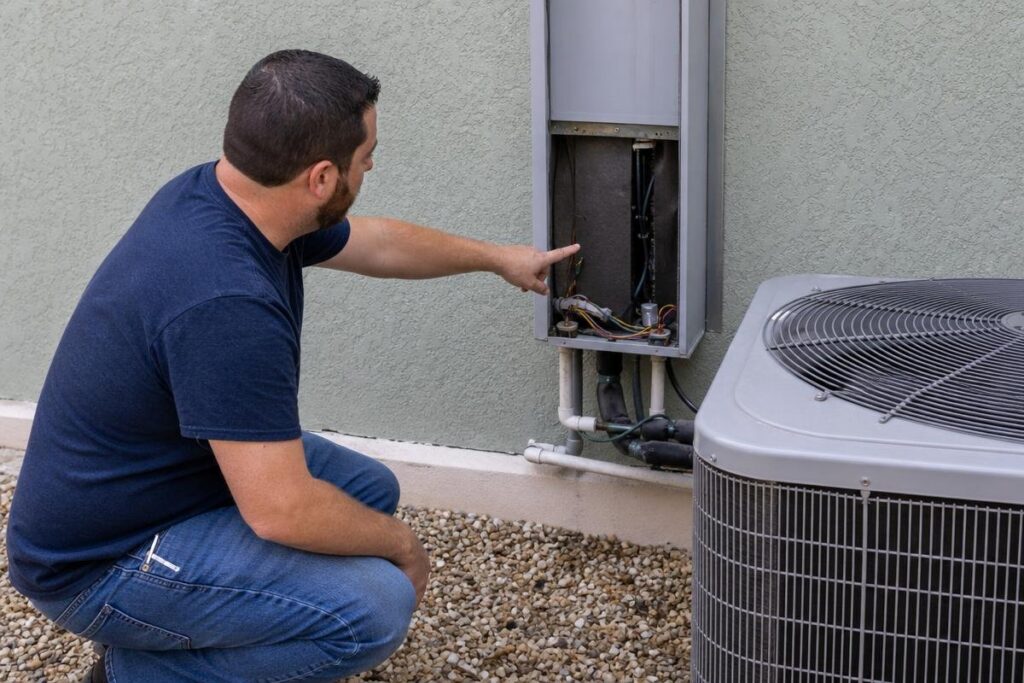
One thing homeowners appreciate: our team handles both the HVAC and electrical work. You don’t need to schedule a separate electrician and coordinate two crews. We also pull the required mechanical and electrical permits from the City. Installing without permits creates real problems when you sell your home or file an insurance claim. A licensed installer handles that paperwork as part of the job.
How Long Does Installation Take?
A single-zone ductless mini split installation typically takes four to eight hours, often completed in one day. A multi-zone system with three or four indoor units runs one to two days. You don’t need to leave your home during the work.
What to Expect After Installation
Before we pack up, we walk you through remote control operation, smart thermostat setup if applicable, and filter cleaning. Filters slide out and rinse with water every four to six weeks during heavy use. Staying on top of that keeps the system running at peak efficiency. For more ways to get the most out of your system, our energy-saving tips for AC units cover the basics.
Most manufacturers offer five to twelve year parts warranties when a licensed contractor installs the system. That warranty coverage is one of the strongest reasons to use a licensed installer rather than a DIY kit or an unlicensed crew.
Ductless Mini Splits vs. Other Cooling Options for Homes Without Ducts
You have real choices here. Window units, portable AC, and full ductwork retrofits all get considered by homeowners in older neighborhoods. Here is an honest look at how each option stacks up.
Ductless Mini Split vs. Window Air Conditioner
Window units have a lower upfront cost, which can sound appealing. But they are loud, they block natural light, and they leave a gap in your window that cannot be fully locked. Every spring you haul them out of storage. Every fall you pull them back in.
A mini split costs more upfront. In return, you get a permanent, quiet system that is significantly more efficient and does not compromise your home security. For most homeowners who plan to stay put, the math shifts quickly in favor of the mini split.
Ductless Mini Split vs. Portable AC Unit
Portable units are even less efficient than window units. They still need a vent hose routed through a window opening, so you have not really solved the window problem. They work fine for a rental apartment or a temporary situation.
If you own your home and want real summer comfort through August heat stretches, a portable AC is not a long-term answer.
Ductless Mini Split vs. Adding Central Air with New Ductwork
This is the comparison that matters most for older homes with plaster walls and no existing chases. Retrofitting a full duct system means opening walls and ceilings throughout the house. Costs and project timelines vary, and the work can be disruptive.
A multi-zone mini split cools the same home for significantly less money with far less construction. The honest trade-off is airflow uniformity. Central air moves conditioned air through every room from a single system. Mini splits require an air handler in each zone. For most older homes in this area, that trade-off is worth it.
Frequently Asked Questions
Can a ductless mini split heat my St. Paul home in winter?
Yes, and it handles more of the winter than most homeowners expect. Cold-climate mini splits are rated to operate down to -13°F, which covers the vast majority of Minnesota winter days. For the deepest cold snaps, keep your existing furnace or boiler running as the primary heat source. The mini split handles shoulder-season heating in fall and spring, and your furnace covers the extremes. That dual-system approach gives you year-round comfort without overloading either system.
How much does a ductless mini split cost to install in St. Paul?
Costs depend on the number of indoor units, installation complexity, and your home’s access conditions. Check current utility programs directly for eligibility and potential rebates. The most accurate way to know your cost is an estimate. Our team will measure your space, check your electrical panel, and give you a firm number before any work begins.
Do I need a permit to install a mini split in St. Paul?
Yes. Mechanical and electrical permits are required for ductless mini split installation. A licensed contractor pulls those permits as part of the job. Skipping the permit is not worth the risk. It creates real problems when you sell your home or file an insurance claim. Our team handles all permitting so you never have to track that down yourself.
How do I maintain a ductless air conditioner?
Clean the indoor filter every four to six weeks during heavy use. Most filters slide out and rinse with water, so it takes about five minutes. Once a year, schedule a professional tune-up that covers refrigerant charge, coil cleaning, and electrical connections. Skipping that annual service is the most common reason mini splits underperform or fail early. Our guide to keeping your HVAC system ready for summer covers maintenance basics that apply to mini splits too.
Can one outdoor unit power multiple rooms?
Yes. One outdoor compressor can connect to two, three, or four indoor air handlers. Each indoor unit operates independently, so you can cool one room without running the others. The outdoor unit must be sized correctly for the combined load of all the indoor units. That calculation happens during the site assessment before installation begins.
Are there rebates available for mini split installation in St. Paul?
Both Xcel Energy and CenterPoint Energy offer rebates on qualifying high-efficiency heat pump equipment. Rebate amounts and qualifying equipment lists change periodically. Check each utility’s current rebate portal for the latest figures. Our team can help you identify qualifying equipment and handle the paperwork so you do not leave money on the table.
Your home has a cooling solution that fits it. You do not need to tear out plaster walls or haul window units in and out every year. Schedule a free estimate with our team at 1727 MN-36, St Paul, MN 55109, and a McQuillan Home Services LLC technician will measure your rooms, check your electrical panel, and tell you exactly which ductless system makes sense for your home and your budget. We handle the HVAC work, the electrical work, and the permits. One call, one crew, and a system sized correctly for a Minnesota summer.
Ready to Get Started with McQuillan Home Services LLC?
Get in touch to speak with our team directly. We’re ready to answer your questions, walk you through your options, and help you find the right solution for your needs. Whether you’re just starting to plan or ready to move forward, we’ll make the process simple and stress-free.
Reach out today and let’s talk about how we can help.