
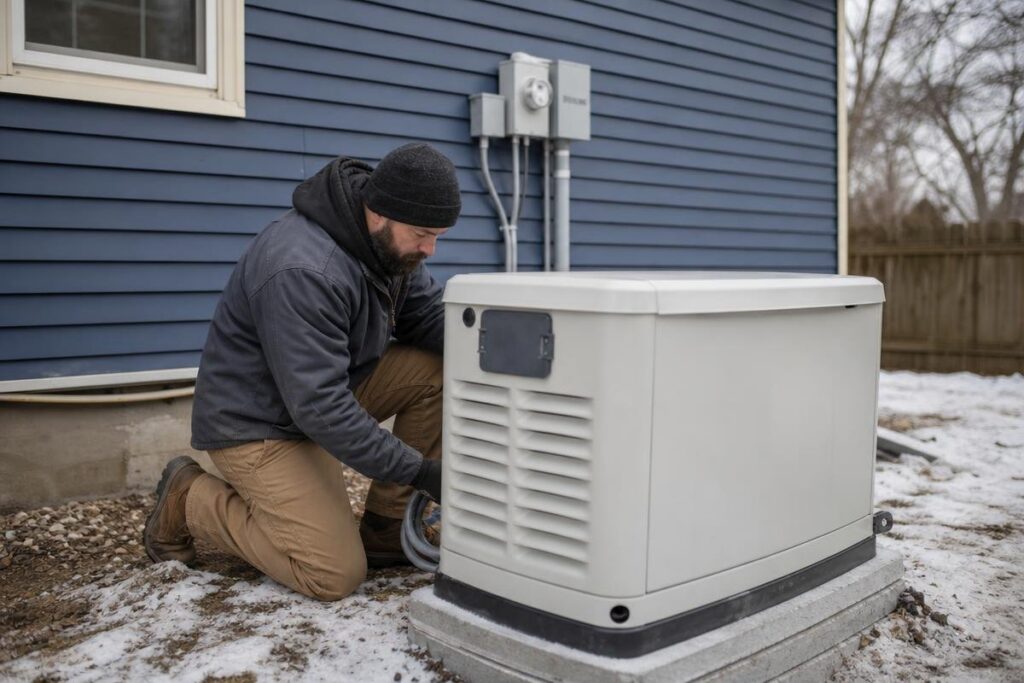
St. Paul winters don’t give you much warning. When a January ice storm knocks out power for hours, your furnace stops and your sump pump goes quiet, and your family gets cold fast. A properly sized standby generator can automatically power selected or whole-home loads, depending on the system design. McQuillan Home Services LLC has been helping St. Paul homeowners protect their homes since 1883, and our licensed electricians handle the full installation, including permits, so you don’t have to figure that part out on your own.
Ready to stop worrying about the next outage? Let’s find the right generator for your home.
Key Takeaways
- A standby home backup generator starts automatically during an outage, keeping your furnace, sump pump, and lights running.
- Natural gas standby generators are the most practical choice for most St. Paul homes already connected to Xcel Energy’s gas lines.
- St. Paul requires electrical and gas permits for generator installation, and our team handles that process for you.
- Whole-house generators and partial-home models are both options, and the right size depends on what you need to power.
- A standby generator can be a practical option for homeowners who want backup power during outages.
Picture a February ice storm rolling through Hamline-Midway at 2 a.m. The power goes out. Your furnace blower stops. The sump pump goes silent. In Minnesota, a power outage is not just an inconvenience. It is a safety problem, especially for anyone in the home who relies on a CPAP machine or other plug-in medical equipment.
St. Paul homeowners face outages year-round. Winter ice storms and summer severe thunderstorms are the two biggest triggers. A properly sized backup-power system can support selected loads during an outage, depending on the system design and fuel availability.
Generator type, capacity, installation requirements, and project-specific costs all shape the right backup-power decision for your St. Paul home.
We have been serving homeowners from our location at 1727 MN-36, St Paul, MN 55109 since 1883, and our electrical services team handles generator installation, permitting, and transfer switch work from start to finish. If you want to understand your options before picking up the phone, this is the right place to start.
Standby vs. Portable vs. Inverter: Which Generator Type Fits Your Home?
Not all generators work the same way, and the wrong choice can leave you cold, literally, during a St. Paul winter outage. Here is a plain-English breakdown of the three main types so you can figure out what actually fits your home and budget.
Standby Generators: Automatic Whole-House Power
A home standby generator is permanently installed outside your home, connected directly to your natural gas or propane supply and your electrical panel through an automatic transfer switch (ATS). When the power goes out, the ATS detects the outage and starts the generator within seconds. You do not have to do anything.
Whole-house generator installation typically involves units ranging from 7 kW up to 22 kW or more, enough to run your furnace, refrigerator, lights, sump pump, and most appliances at once. Brands like Generac, Kohler, and Cummins make reliable standby units built for this kind of continuous use. Automatic startup can be a practical safety benefit during cold-weather outages.
Most St. Paul homes are on Xcel Energy’s natural gas network, which makes natural gas the default fuel for a standby generator here. No fuel storage, no stale gas problems, no trips to the gas station in a blizzard.
Portable Generators: Lower Cost, More Limits
Portable generators run on gasoline and come in a range of capacities. They can power a few key circuits during a short outage. But they come with real limits you need to know before you buy.
Never run a portable generator in your garage, even with the door open. Carbon monoxide (CO) builds up fast and kills quickly. Keep it at least 20 feet from any window or door. Also, gasoline goes stale in storage. Stale fuel is the top reason portable generators fail to start when you actually need them.
If you notice electrical issues like flickering lights before an outage season, get those checked before adding a generator to the mix.
Inverter Generators: Quiet Power for Essentials
Inverter generators are a cleaner, quieter subcategory of portable units. They produce power with lower total harmonic distortion, which means it is safe for sensitive electronics like CPAP machines, laptops, and phone chargers. Output ranges from 1,000 to 7,000 watts, and they run at 50 to 60 decibels versus the 65 to 75 decibels of a standard portable.
They work well for short outages where you just need the essentials covered. They are not designed to power your whole home through a multi-day Minnesota storm.
How to Size a Backup Generator for a St. Paul Home
Getting the size wrong is the most common generator mistake homeowners make. Too small and your furnace won’t start. Too large and you’ve spent thousands more than you needed to. Here’s how to get it right.
Start With Your Critical Loads
Think about what you actually need to keep running during a winter outage. For most St. Paul homes, that list looks like this:
- Furnace blower motor: 600 to 1,200 watts running; startup demand varies by model
- Sump pump: 800 to 1,500 watts running; startup demand varies by model
- Refrigerator: 150 to 400 watts
- LED lights: 10 to 15 watts each
- CPAP machine: 30 to 60 watts
- Electric water heater: 4,000 to 5,500 watts, depending on the model
Add up the running watts of everything you want powered at the same time. Then add the highest single startup surge, which in most St. Paul homes is the sump pump or furnace blower. That total is your minimum generator size.
Whole-Home Sizing: What the Numbers Actually Mean
Generator output is measured in kilowatts (kW). One kW equals 1,000 watts. Use kW as your working number and ignore kVA for residential sizing purposes.
For a typical 1,500 to 2,500 square foot home with a gas furnace, a 14 to 17 kW home backup generator covers most critical loads comfortably. If your home has electric heat or you want to charge an EV during an outage, plan for 20 to 22 kW. A licensed electrician can calculate your exact load before you buy anything.
A Simple Sizing Table for St. Paul Homes
This table gives you a starting point. Fuel column assumes Xcel Energy natural gas service, which covers most of the city.
|
Home Profile |
Recommended Size |
Fuel Type
|
|---|---|---|
|
Small home, under 1,500 sq ft, gas heat, essential circuits only |
10 to 14 kW |
Natural gas |
|
Mid-size home, 1,500 to 2,500 sq ft, gas furnace, sump pump, fridge |
14 to 17 kW |
Natural gas |
|
Large home, 2,500+ sq ft, gas heat, multiple circuits |
18 to 22 kW |
Natural gas or propane |
|
Any size home with electric heat or EV charging |
22 to 26 kW |
Natural gas or propane |
These are starting estimates. If you’re also weighing choosing the right water heater for your St. Paul home, factor in whether it’s electric or gas before finalizing your generator size. A licensed electrician should always verify your actual load before installation.
Want us to calculate the right generator size for your home? Schedule a free electrical assessment and get a number you can trust.
Fuel Types for Home Standby Generators: Natural Gas, Propane, and Diesel
The fuel your standby generator runs on affects everything: how long it runs, what it costs to install, and whether you need on-site storage. Most St. Paul homeowners have one clear best option. Here is how each fuel type stacks up.
Natural Gas: The Most Practical Choice for Most St. Paul Homes
Many homes in the area use natural gas, but fuel availability varies by property and utility service. That means your standby generator can tap into an existing fuel supply without any on-site tank. Its runtime depends on fuel availability, utility conditions, and the system design.
A licensed professional should confirm gas-line capacity and utility conditions for the planned generator load. The main requirement is a licensed gas line connection sized for the generator’s load. Our team handles gas line connections as part of generator installation, so you get the right setup from the start.
If your home already has natural gas service, this is almost always the right fuel choice.
Propane: A Strong Option When Gas Lines Are Not Available
Natural-gas availability varies by property, so confirm utility service before selecting a fuel type. Propane is a reliable alternative. You store it on-site in a 100 to 500-gallon tank. Propane runtime depends on tank size, generator load, weather, and the equipment model.
Confirm current propane-tank setback requirements with the local authority before installation. Fuel cost runs higher than natural gas, and you need to monitor tank levels before a storm season hits.
Diesel: Rarely the Right Fit for Residential Use
Diesel generators are common in commercial settings, but they are a tough fit for most homes. Stored diesel degrades in 6 to 12 months without a fuel stabilizer treatment. They run louder than gas or propane units, require more maintenance, and on-site fuel storage carries spill and fire risk.
If you have a specific reason to consider diesel, give us a call. We will talk through your situation honestly before you commit to anything.
What Does Home Backup Generator Installation Actually Involve?
A lot of homeowners assume generator installation is a one-day job. In reality, a proper whole house generator installation has several moving parts, and knowing what to expect upfront makes the whole process much smoother. Here is what we walk through on every job.
Site Assessment and Permit Pull
Before any equipment gets ordered, a licensed electrician comes out to check your gas line capacity, electrical panel, and the best placement for the unit. Confirm current local placement and setback requirements before selecting the generator location.
Confirm current permit requirements and timelines with the local authority before scheduling installation. Our team can explain the permitting process for your project. If your home has an older panel or signs of trouble, we flag that during the assessment before it becomes a problem mid-install.
Electrical Work: The Transfer Switch
The automatic transfer switch, or ATS, is the brain of a home standby generator system. It monitors your utility power constantly. The moment the grid goes down, the ATS disconnects your home from utility power and connects it to the generator, typically within 10 to 30 seconds. You do not have to do anything.
If you only need to cover critical circuits like your furnace, refrigerator, and sump pump, a subpanel or load-center option keeps costs down while protecting what matters most. Portable generators use a manual transfer switch instead, which requires someone to physically make the switch during an outage.
Gas Line and Pad Installation
A licensed gas fitter runs a dedicated gas line from your meter to the generator location. This is not a job for shortcuts. The line has to be sized correctly for the generator’s fuel demand. We also pour a concrete pad, typically 3 to 4 inches thick, to give the unit a stable, level base. A composite pad is an option if concrete does not work for your site. Propane installs require a separate coordination step with your propane supplier before we can complete the hookup.
Startup, Load Test, and Walkthrough
Once everything is connected and inspected, we run the generator under load. That means we verify the ATS switches correctly, confirm circuit coverage, and check that the unit performs the way it should under real demand. Then we walk you through the weekly self-test cycle, which runs 5 to 10 minutes automatically and is completely normal. We also show you where to check oil and coolant levels so you are set between annual maintenance visits.
Ready to get a home standby generator installed the right way? Our licensed team handles permits, gas lines, and electrical work from start to finish.
Why St. Paul Homes Benefit from Backup Power Year-Round
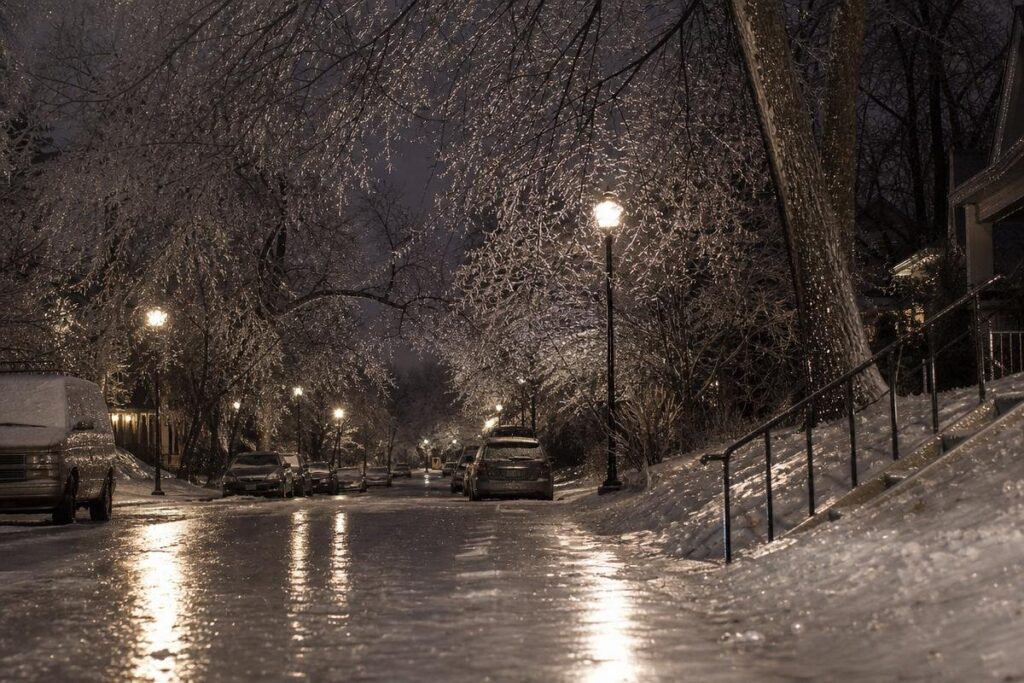
Power outages in St. Paul are not just an inconvenience. Depending on the season, they can be a genuine safety emergency. A home backup generator keeps your home protected no matter what month the grid goes down.
Winter Outages: When a Dead Furnace Becomes a Danger
The area averages roughly 54 inches of snow per year, and winter temperatures regularly drop below 0°F. Most homeowners assume their gas furnace will keep running during an outage. It will not. The blower motor and ignition system both need electricity to operate.
At minus 10°F outside, an unheated home can reach dangerous indoor temperatures within a few hours. Outage risk can vary by weather conditions, utility conditions, and a home’s electrical setup. If you want to protect your home before the cold hits, a furnace tune-up before winter is a smart first step alongside backup power planning.
Spring Flooding and Sump Pump Failure
Snowmelt season runs March through May, and groundwater pressure builds fast. Neighborhoods near the Mississippi River floodplain face the highest risk. A standby generator keeps your sump pump running even when you are away from home and the grid goes down during a heavy rain event.
Read our sump pump installation guide for St. Paul homeowners to understand what your system needs before flooding season arrives.
Summer Storm Outages and Spoiled Food
Minnesota severe thunderstorm season runs June through August. Localized outages can last anywhere from 12 to 72 hours. Your refrigerator becomes unsafe within four hours. Food loss, work-from-home interruptions, and medical-equipment needs can make even a short outage disruptive.
Backup power for home use is not just a winter concern. A whole-house standby generator covers your family every season.
Home Backup Generator Cost: What to Expect in St. Paul
Generator costs vary a lot depending on what type of system you choose and what your home needs to support it. Here are honest ranges so you walk into any conversation with realistic expectations.
Standby Generator Cost Breakdown
Standby-generator equipment is available in a range of capacities. The right size depends on a load calculation and your home’s needs.
Installation scope can include electrical work, a transfer switch, gas-line work, a pad, permits, and possibly a panel upgrade. Get an estimate based on your home’s existing conditions.
Total project costs depend on the selected equipment, electrical work, fuel connection, permitting, and site conditions.
Portable and Inverter Generator Costs
Portable and inverter generators come in a range of capacities and features.
A licensed electrician can determine whether a manual transfer switch is appropriate for your setup. Never backfeed power through an extension cord directly into your home’s outlets. That is a serious safety hazard for utility workers and your neighbors.
For more on electrical safety basics every homeowner should know, our blog covers the key risks clearly.
Factors That Affect Your Final Price
- Distance from your gas meter to the generator location
- Your electrical panel’s age and current capacity
- City permit fees, which vary by project scope
- Generator brand, model, and warranty terms
- Whether a propane tank installation is required
The best way to get an accurate number is a site visit. Give us a call and we can assess your home’s specific setup before quoting anything.
Generator Safety and Maintenance: Keeping Your System Ready
Critical Safety Rules for Any Generator Type
The single most dangerous mistake homeowners make with portable generators is running them indoors. Carbon monoxide is colorless and odorless, and it kills fast. Never run a portable generator inside your home, garage, or basement. Keep it at least 20 feet from any window, door, or vent, and direct the exhaust away from the house.
The second big hazard is backfeed. Plugging a generator directly into a wall outlet without a proper transfer switch can push electricity back onto utility lines. That can kill a lineworker trying to restore power in your neighborhood. A correctly installed transfer switch prevents this entirely.
Follow current carbon-monoxide detector requirements and manufacturer safety guidance for your home and generator setup.
For gasoline storage, use approved containers and treat the fuel with a stabilizer if it will sit longer than 30 days. Store containers away from living areas and heat sources.
Annual Maintenance Your Standby Generator Needs
Follow the generator manufacturer’s maintenance schedule and arrange service as recommended. A generator that won’t start during a deep cold snap is a safety emergency, not an inconvenience.
Here’s what a thorough annual service covers:
- Oil and filter change (every 100 to 200 hours of run time, or annually)
- Air filter inspection and replacement
- Spark plug inspection
- Battery test (a weak battery is the most common reason a standby unit won’t start)
- Coolant level check on liquid-cooled models
- Transfer switch exercise and function test
- Visual inspection of all fuel lines
You may also notice your standby generator running briefly once a week, typically 5 to 10 minutes. That’s normal. The weekly self-test keeps the engine lubricated and the battery charged. If your unit skips its self-test or runs longer than usual, that’s worth a call to our team to check out.
Frequently Asked Questions
How long does a standby generator last?
Generator lifespan and maintenance needs vary by equipment model, operating conditions, and upkeep. Follow the manufacturer’s recommended maintenance schedule.
Do I need permits for generator installation in the Twin Cities area?
Confirm current permit and licensing requirements with the local authority before installation. Our team can explain the permitting process for your project.
What size generator do I need for a 2,000 sq ft home?
Generator size depends on your actual loads, equipment startup demand, and the circuits you want to support. A licensed electrician should perform a load calculation before recommending a unit.
What does it cost to run a natural gas generator during a multi-day outage?
Fuel use and operating costs vary by generator size, load, fuel rates, and outage duration. Ask your installer for an estimate based on the unit and loads you plan to run. For more on protecting your home from winter damage, see our guide on how to prevent frozen pipes in your home this winter.
Can one generator power my entire house?
Yes, a properly sized standby generator can run your whole home, including the furnace, central AC, refrigerator, and lights, without any manual switching. The key word is properly sized. An undersized unit will struggle and can shorten the generator’s life. Our licensed electricians calculate your actual load before recommending a unit, so you are not guessing.
Ready to Get Started?
McQuillan Home Services LLC has been serving the Twin Cities area since 1883. Our licensed electricians and gas fitters handle every part of a generator installation, from the site assessment and permit pull to the startup test and homeowner walkthrough. We serve the metro from our location at 1727 MN-36, St Paul, MN 55109. Schedule a home assessment with our team and find out exactly what size generator your home needs and what it will realistically cost. Book online or contact us to get started before the next outage catches you without power.
Ready to Get Started with McQuillan Home Services LLC?
Get in touch to speak with our team directly. We’re ready to answer your questions, walk you through your options, and help you find the right solution for your needs. Whether you’re just starting to plan or ready to move forward, we’ll make the process simple and stress-free.
Call us before the next storm and let’s talk about protecting your home with backup power.