
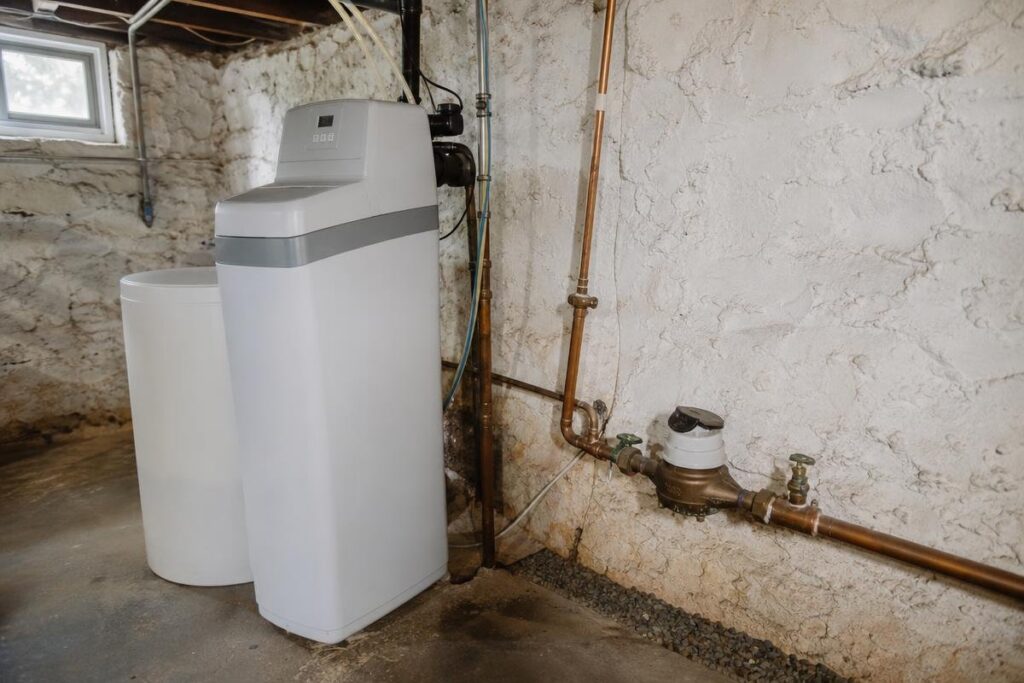
Hard water is one of those problems that sneaks up on you. You notice the white crust around your faucets, the soap that never quite lathers, the water heater working harder than it should. If you’re trying to figure out how to choose a water softener for your St. Paul home, the answer depends on your actual water hardness, your household size, and the type of system that fits your plumbing setup. We’ve been helping Twin Cities homeowners solve exactly this problem since 1883, and the right choice comes down to a few practical decisions.
Not sure what your water hardness level is or which softener fits your home? Our licensed team offers a free water hardness test so you buy the right system the first time.
Key Takeaways
- St. Paul city water runs about 12 to 20 grains per gallon, but well water in nearby areas can exceed 15 gpg and needs more treatment.
- Knowing how to choose a water softener starts with testing your water hardness and iron levels before buying anything.
- Grain capacity and regeneration settings should match your household’s actual daily water use, not a generic estimate.
- Salt-based ion exchange softeners are the most common type, but demand-initiated regeneration models are a smarter environmental choice in the Twin Cities.
- Most St. Paul homes can install a softener near the water meter in the basement, which keeps installation costs reasonable.
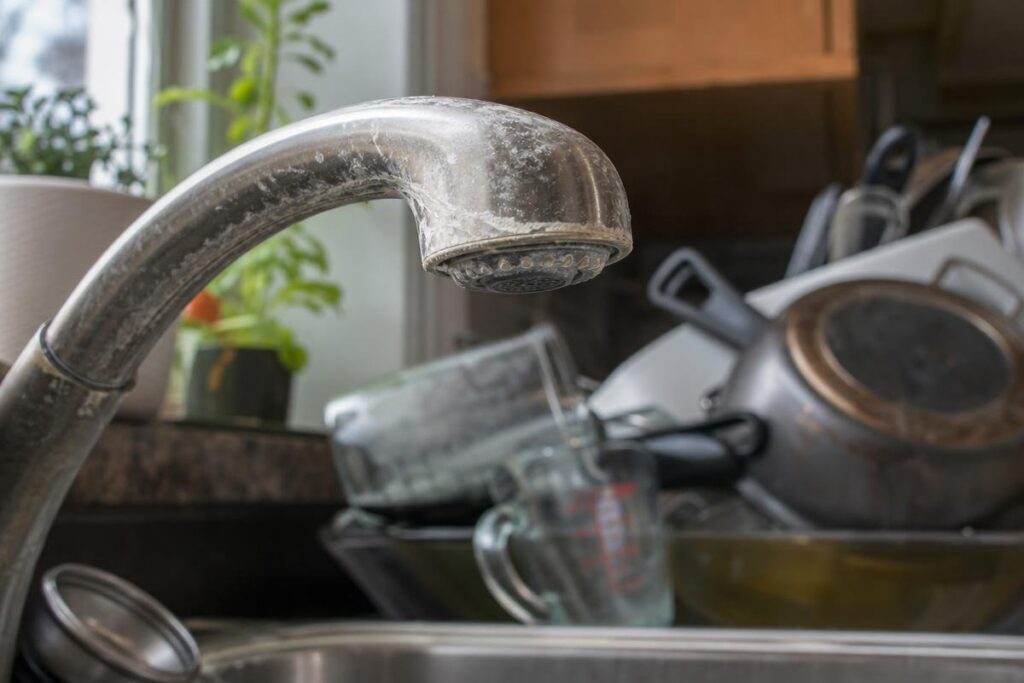
You pull your dishes out of the dishwasher and they look cloudy. Your towels feel stiff straight out of the dryer. There is a crusty white ring around the bathroom faucet that scrubbing barely touches. That is hard water doing its work, and it is more common in this area than most people realize.
Here is the thing: Saint Paul Regional Water Services does treat city water using a lime softening process. But even after treatment, tap water in the area still runs around that 12 to 20 gpg baseline. That is enough to leave scale on your appliances, dry out your skin and hair over time, and force your water heater to work harder than it should. If you are already noticing those symptoms, check out our guide to signs your St. Paul home has hard water to confirm what you are dealing with.
Twin Cities homeowners can compare system types, size a unit for their household, and understand what affects cost. Plain English. No guesswork.
What Makes St. Paul Water So Hard?
Your city water starts at the Mississippi River. Saint Paul Regional Water Services treats it using a process called lime softening, which pulls out a good chunk of dissolved calcium and magnesium. That helps. But it does not eliminate hardness entirely. By the time water reaches your tap, it still sits at that 12 to 20 gpg baseline.
A grain per gallon, or gpg, is just a way to measure dissolved minerals. One gpg equals about 17.1 milligrams of calcium and magnesium per liter of water. The more gpg, the harder your water.
Hardness classifications vary by reference, but water at this range can contribute to scale on fixtures and reduce the efficiency of water-using appliances. If you are curious how hardness affects other plumbing decisions, our guide on water softener vs. water filter breaks down which problem each system actually solves.
St. Paul’s Actual Hardness Numbers
City water customers are looking at that 12 to 20 gpg baseline post-treatment. If you are in Maplewood or another part of Ramsey County on a private well, your numbers can jump to 10 to 15 gpg or higher, sometimes with iron and manganese added to the mix. Testing your well water before buying anything is not optional in those areas.
Why Hardness Level Determines Which Softener You Need
Your hardness reading is the single biggest factor in choosing the right system. Here is how the decision breaks down:
- Under 3 gpg: You probably do not need a softener at all.
- 3 to 7 gpg: A standard single-tank salt-based softener can handle this range well.
- 7 to 15 gpg: You need a larger or twin-tank system to keep up with demand.
- Above 15 gpg: A softener alone is not enough. You will also need iron and manganese filtration.
Knowing your number before you shop saves you from buying the best water softener for hard water in Minnesota only to discover it is undersized for your actual conditions.
How Does a Water Softener Actually Work?
Think of the resin tank inside a water softener as a magnet for hardness minerals. Water flows in, and tiny resin beads grab the calcium and magnesium ions responsible for scale buildup, soap scum, and that chalky residue on your dishes. In exchange, the beads release a small amount of sodium into the water.
Ion Exchange: The Core Process
This swap is called ion exchange. Calcium and magnesium carry a positive charge. The resin beads carry a negative charge. Opposites attract, so the hardness minerals stick to the beads while sodium ions take their place in the water moving through your pipes.
The amount of sodium added varies with water hardness and system settings. If you are comparing a salt-based vs salt-free water softener, this is one of the first facts worth knowing.
The Regeneration Cycle Explained
Eventually, the resin beads fill up with hardness minerals and stop working. That triggers regeneration. Brine from the salt tank flushes the resin bed, knocking the calcium and magnesium loose and draining them away. The beads recharge with sodium and are ready to go again.
Smarter systems use demand-initiated regeneration, or DIR. Instead of running on a fixed timer, DIR only kicks off when the resin is actually exhausted. That saves salt and water. For homes in White Bear Lake or Woodbury on private wells, where hardness can swing well above 10 gpg, DIR adjusts automatically rather than wasting resources on a schedule that does not match your actual water use.
Salt-Based vs. Salt-Free Systems: Which Is Right for Your Home?
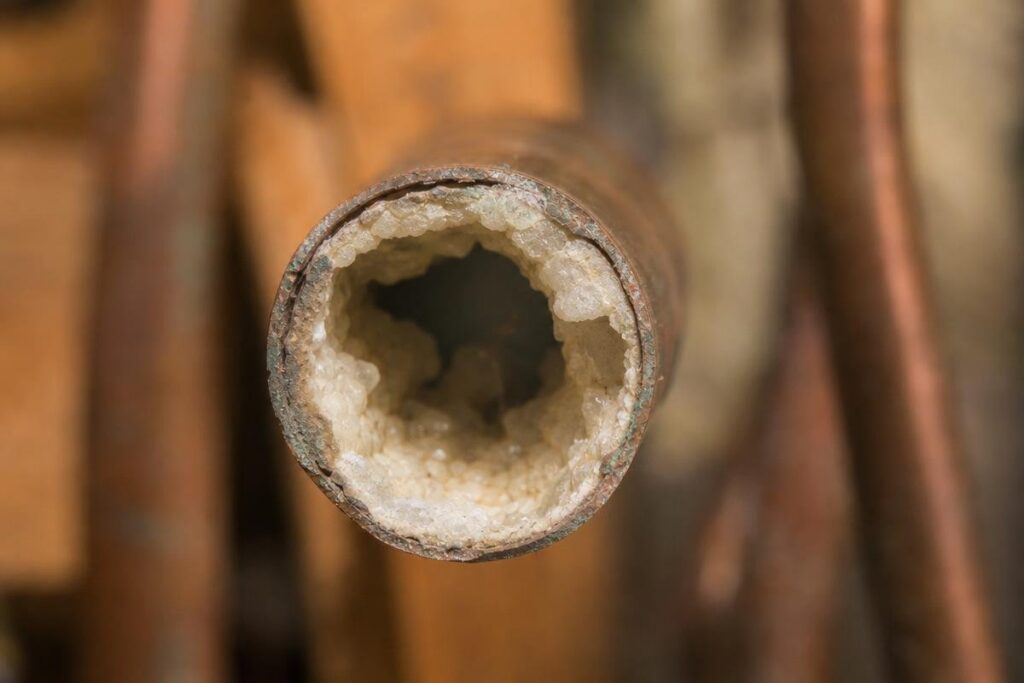
This is the question we hear most often, and the answer actually depends on where your water comes from and what you’re trying to fix. Here’s a straight comparison so you can make a real decision.
Salt-Based (Ion Exchange) Softeners
Salt-based systems actually remove calcium and magnesium from your water by swapping those minerals for sodium ions. The result is genuinely soft water, not just conditioned water. This is the right choice if your hardness is above 7 gpg, if you have older galvanized or copper pipes, or if you have a tankless water heater. Scale buildup inside a tankless unit’s heat exchanger is expensive damage, so if you’re already watching whether your water heater needs attention, hard water is worth taking seriously.
The tradeoff: you’ll refill salt roughly every 6 to 8 weeks for a household of four, and the system produces brine wastewater during each regeneration cycle.
Salt-Free Conditioners and Template-Assisted Crystallization (TAC)
Salt-free systems don’t remove minerals. Instead, TAC technology changes the crystal structure of calcium and magnesium so they’re less likely to stick to pipes and fixtures. No salt to haul, no slick feel on your skin, no brine discharge.
Is it a gimmick? No, but it has limits. At hardness levels of 10 gpg or more, salt-free systems may not be the best fit. At city water hardness, a TAC conditioner is a legitimate option, especially if someone in your household is on a low-sodium diet or you mainly want scale prevention rather than full softening.
Not sure whether salt-based or salt-free is right for your home? Get a free water hardness test and we’ll match the system to your actual water, not a generic estimate.
Dual-Tank and Whole-Home Systems
A dual-tank system keeps one tank in service while the other regenerates, so you never run out of soft water. This matters for households of four or more, high daily water users, or anyone on a private well with hardness above 10 gpg. Well users in the outer Ramsey County suburbs often need iron and manganese filtration added to the system too, which whole-home setups handle well. For most city-water homes, a single-tank system sized correctly is enough.
How to Size a Water Softener: Grain Capacity Explained
Grain capacity is the number your water softener needs to hit before it regenerates. Get this number wrong and you’ll either run out of soft water or waste salt regenerating more often than needed. The math is simple once you know your starting numbers.
The Simple Grain Capacity Formula
City water in St. Paul runs at that 12 to 20 gpg baseline after municipal treatment. If you’re on a private well in Ramsey County, test first. Your hardness could be 10 to 15 gpg or higher.
Here’s the formula, step by step:
- Start with your water hardness in gpg (use your tested hardness result, which commonly falls between 12 and 20 gpg for city water)
- Count the people in your household
- Multiply: people x 75 gallons per day x hardness gpg = daily grain removal needed
- Multiply that number by 7 to get your weekly grain capacity target
Family of 4 on city water: use the household’s tested hardness result in the formula. At 16 gpg, 4 x 75 x 16 = 4,800 grains per day. Times 7 equals 33,600 grains per week. A 40,000-grain system may be appropriate, depending on the test result and household demand. If your water has iron, account for it when sizing the system based on your water test and the manufacturer’s guidance.
Follow the system manufacturer’s guidance for regeneration settings based on your water test and household demand.
St. Paul Household Sizing Examples
- Single person or couple: choose capacity based on your tested hardness and daily water use.
- Family of 3 to 4: choose capacity based on your tested hardness, peak demand, and regeneration settings.
- Family of 4 or more on a well at 12 plus gpg: 40,000 to 48,000-grain; consider a dual-tank setup
Bigger is not always better. An oversized unit regenerates too infrequently and that resin bed can develop problems. Size to your actual household, not your worst-case fears. St. Paul has a lot of older housing stock, with many homes built before 1960, so basement utility rooms in Victorian-era and bungalow-style homes can have tight clearances and a mix of galvanized and copper pipe. A standard single-tank unit still fits right next to the water meter in most of these homes, but the older plumbing is worth checking before you buy. If you want to avoid common plumbing mistakes St. Paul homeowners make, getting the sizing right before you buy is one of the best places to start.
What Does a Water Softener Cost in St. Paul?
Budget questions deserve straight answers. Water-softener pricing varies based on equipment tier, your plumbing setup, and whether you need iron filtration alongside softening.
Equipment and Installation Cost Ranges
Timer-based units regenerate on a fixed schedule, while demand-initiated regeneration systems regenerate based on actual water use. Equipment options and pricing vary by capacity and features.
Twin-tank systems, whole-home setups, iron filtration, and older-plumbing conditions can all affect the final scope. Salt-free conditioners can have different maintenance requirements. Get an estimate based on your water test and plumbing setup.
Softened water also protects your appliances over time. If you want to understand how a water softener affects your water heater’s lifespan, that context is worth reading before you buy.
Ongoing Operating Costs to Budget For
Salt use, water use, and service needs vary by system, household demand, and water hardness. Ask about expected maintenance requirements for the system you choose.
Want a real number for your home? Our team can walk you through equipment options and installation costs based on your actual setup.
Environmental Considerations Every St. Paul Homeowner Should Know
If you live near the Mississippi River corridor, this question probably crosses your mind: is my water softener actually hurting the river? It is a fair concern, and the honest answer is that it depends on how your system is set up and used.
Salt Discharge and the Mississippi River
Salt-based softeners flush brine during regeneration. That brine travels through the municipal wastewater system, and some chloride eventually reaches local waterways, including the Mississippi. The Minnesota Pollution Control Agency has documented elevated chloride levels in the metro area’s streams and rivers. Chloride is toxic to freshwater organisms and does not break down once it enters the water.
City sewer customers in the area are not currently restricted from using salt-based softeners. But the environmental concern is real, and it is worth taking seriously.
How to Soften Responsibly
A few practical steps make a meaningful difference. First, choose a demand-initiated regeneration (DIR) system. DIR systems regenerate based on actual water use and can reduce salt and brine discharge compared to timer-based units. Second, set your hardness level accurately. Over-treating wastes salt and adds unnecessary chloride to the system. Third, use high-purity evaporated salt pellets, which produce less sludge and run cleaner cycles.
If your tap water tests at that city-water hardness level and your main concern is scale buildup, a salt-free conditioner may be worth considering as part of the common plumbing mistakes you want to avoid long term. Responsible use of a salt-based vs. salt-free water softener starts with knowing your actual hardness number.
Your Water Softener Buying Checklist for St. Paul Homes
Before you buy, run through this checklist. It covers every decision point that matters for homes here, from city water in the older core neighborhoods to private wells in the outer suburbs. Check each item off in order and you will not miss anything important.
- Test your water hardness first. McQuillan Home Services LLC offers water testing so you know your actual grain-per-gallon number before you spend a dollar on equipment.
- Check iron and manganese levels. Even low iron content can foul a resin bed fast. If your water contains iron, choose equipment rated for the level identified in your water test.
- Calculate your grain capacity. Multiply your household size by daily gallons used, then multiply by your hardness level. The sizing section above walks you through the full formula.
- Choose demand-initiated regeneration (DIR) over a timer-based system. DIR only regenerates when your resin is actually exhausted, which saves salt and protects local waterways.
- Look for NSF/ANSI 44 certification. That certification means the system has been independently tested for cation exchange capacity. Do not skip this.
- Plan your installation location before you order. In most pre-1960 St. Paul homes, the basement utility room near the water meter is the right spot, on the main line before the water heater branch.
- Budget for professional installation to meet Minnesota plumbing code. A licensed plumber can confirm the drainage, bypass, and other installation requirements for your home.
- Ask about salt delivery or a service plan. Ongoing maintenance keeps your system running efficiently year after year.
One more thing before you finalize your purchase: check your existing pipes. Older plumbing can hide corrosion or mineral buildup that affects softener performance. Review the signs your plumbing may need attention before installing a softener so you are not solving one problem while another is waiting.
Why St. Paul Homeowners Trust Us for Water Softener Installation
McQuillan Home Services LLC has been serving homes in this area since 1883, making us one of the longest-established home service companies in Minnesota. We are a fully licensed and insured Minnesota plumbing contractor, and our installers follow current state plumbing code on every job, including the required bypass valve and drain-line air gap on softener installs. That kind of history means we have seen every water quality situation a Minnesota home can throw at us, from aging bungalows in the older core neighborhoods to newer builds out in Woodbury and Oakdale.
Our process covers everything in one call. We start with a water test, help you pick the right system for your home, handle the full installation, and stay available for ongoing service after the job is done. You do not need to coordinate a big-box installer, a separate plumber, and a water treatment company. We handle all of it, and we back our installations with a workmanship guarantee so you are covered if anything is not right.
Our customers tell us the same things over and over across thousands of reviews: our technicians explain what they found, give honest recommendations, and offer lower-cost options before suggesting a bigger fix. That approach does not change for water softener installation. If your home does not actually need a full salt-based system, we will tell you. Avoiding common plumbing mistakes St. Paul homeowners make starts with getting an honest assessment up front.
Ready to move forward? Schedule your water softener installation with a licensed McQuillan Home Services LLC technician and we’ll handle testing, sizing, and setup start to finish.
Our team can help with plumbing issues such as a failed bypass valve or a brine tank overflow. Reach us, email us at [email protected], or stop by our office at 1727 MN-36, St Paul, MN 55109. We are here to help.
Frequently Asked Questions
How hard is St. Paul city water?
City tap water in St. Paul runs approximately 12 to 20 grains per gallon after lime softening treatment. If you’re on a private well in areas like Woodbury or White Bear Lake, your hardness can climb well above 10 gpg, often with added iron that complicates softener sizing.
Do I really need a softener on city water?
Not strictly, but it’s worth considering. At the city-water baseline, you won’t see dramatic soap scum or crusty faucets, but scale still builds inside your water heater and dishwasher over time. If you have a tankless water heater, softened water can meaningfully extend its life and keep efficiency up.
How long does a water softener last?
System lifespan and maintenance needs vary by water conditions, equipment quality, and upkeep. Follow the manufacturer’s maintenance guidance for your specific system.
What type of salt should I use?
Evaporated salt pellets are the best choice for most homes. They’re the highest purity option and leave the least residue in the brine tank. Solar salt works but leaves more sediment. Avoid rock salt and rust-removing additives unless your system manufacturer specifically approves them.
Can I install a water softener myself?
Experienced DIYers can handle it, but professional installation makes sure the bypass valve, drain line, and hardness settings all meet Minnesota plumbing code. It also keeps your manufacturer warranty intact. Learning about common plumbing mistakes St. Paul homeowners make is a good starting point if you’re weighing the DIY route.
How much does installation cost in the metro area?
Costs depend on the system, water quality, household demand, and installation conditions. Get an estimate for accurate pricing.
Will a softener help my water heater or appliances?
Yes. Softened water reduces scale buildup inside water heaters, dishwashers, and washing machines, which helps them run more efficiently and last longer. If you’re already thinking about your water heater, read our guide on how to choose a water heater for your St. Paul home to see how water quality ties into that decision.
Ready to stop guessing and get a water test done by someone who knows your local water? Contact McQuillan Home Services LLC or email [email protected]. We’ll test your water, walk you through the right system for your home, and handle the installation start to finish. No pressure. Just a straight answer.
Ready to Get Started with McQuillan Home Services LLC?
Get in touch to speak with our team directly. We’re ready to answer your questions, walk you through your options, and help you find the right solution for your needs. Whether you’re just starting to plan or ready to move forward, we’ll make the process simple and stress-free.
Reach out today and let’s talk about how we can help.