

If your St. Paul home dates to before 1960, there is a real chance the original galvanized supply lines are still running behind your walls. Those pipes corrode from the inside out, and by the time you notice brown water or a pressure drop, the damage is already widespread. Whole house repiping replaces every supply line at once, before small leaks turn into major repairs.
McQuillan Home Services LLC has helped homeowners across the Twin Cities metro make that call with straight answers and licensed plumbing crews ready to work. Seeing rust-colored water or low pressure? Let our team take a look before it gets worse.
Key Takeaways
- Galvanized pipes in pre-1960 St. Paul homes corrode internally, restricting flow long before visible leaks appear.
- Whole house repiping replaces all supply lines at once, eliminating recurring spot repairs on aging pipe systems.
- Common warning signs include discolored water, low pressure, frequent leaks, and visible rust on exposed pipes.
- PEX and copper are the two most common replacement materials, each with different cost and longevity trade-offs.
- Most whole house repiping jobs in the Twin Cities metro are completed within a few days with minimal disruption.
Why St. Paul Homes Are Especially Vulnerable to Pipe Failure
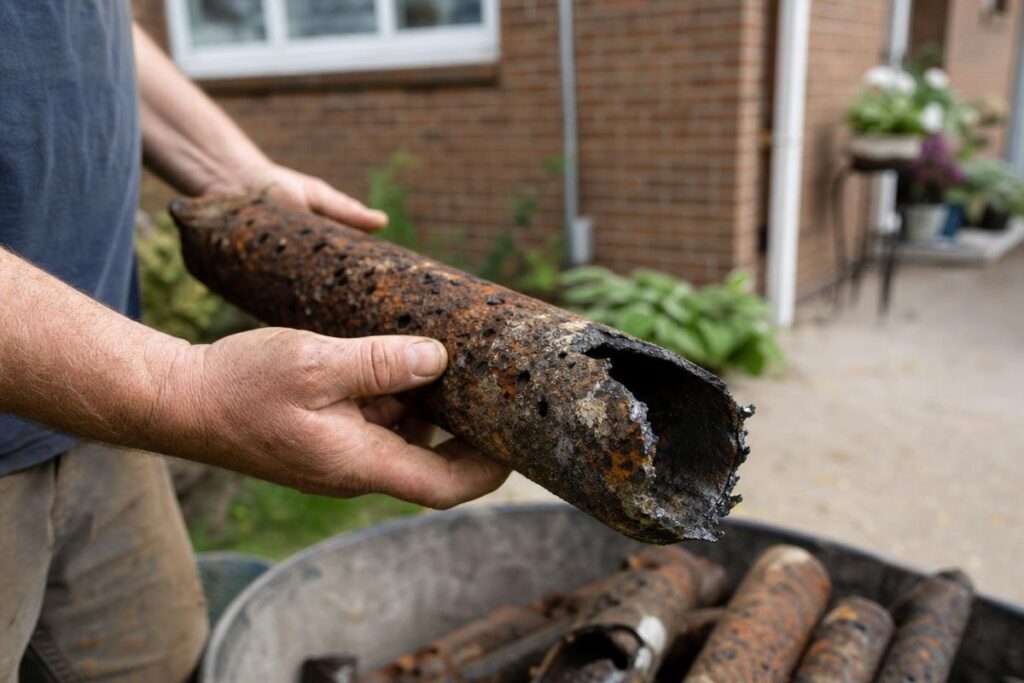
Your water still runs. That does not mean your pipes are fine. Homes in Hamline-Midway, Frogtown, and the West Side were built during an era when galvanized steel and polybutylene were standard. Those materials have a lifespan. Many have already hit it.
This page covers the warning signs of failing pipes, what whole house repiping actually involves, and when to call a licensed plumber. Our crews work in these older neighborhoods every week and know exactly how galvanized and polybutylene lines fail in this city’s housing stock. Keep reading to know where your home stands.
What Is Whole House Repiping and When Does It Apply?
Whole house repiping is the complete replacement of all supply lines in your home, every pipe delivering fresh water to your faucets, showers, toilets, and appliances. It does not include your drain lines or sewer pipes. Those are separate systems entirely.
This is not a small repair. It is a full replacement of the plumbing infrastructure that moves water through your house. Most homeowners consider it when repairs keep piling up, water quality drops, or an inspection turns up a trigger material that cannot be patched.
What the Process Actually Involves
Our licensed plumbers open small access panels at key points in your walls and ceilings. We pull out the old pipe runs and replace them with new copper or PEX lines. Then we restore the drywall. You are not looking at a gut renovation. Most of the work is targeted and precise.
A typical single-family home in St. Paul takes two to five days to repipe, depending on the size and layout. A 1,200 square foot rambler usually runs two to three days, while a two-story with four bathrooms can stretch to five. Water service is shut off during active work each day but restored each evening so your family can use the house normally overnight.
Which Pipe Materials Typically Trigger a Full Repipe
Three materials show up repeatedly in older St. Paul homes and almost always point toward a full replacement rather than spot repairs:
- Galvanized steel pipe (standard in homes built before 1970): Corrodes from the inside out. Scale buildup narrows the pipe over time, which is a common driver of low water pressure in your St. Paul home. Hard mineral water accelerates the damage.
- Polybutylene pipe (installed roughly from the mid-1970s through the mid-1990s): Reacts poorly to chlorine and chloramines in treated municipal water. Joints fail without warning. Common in homes rehabbed or built during that era in neighborhoods like Hamline-Midway and Payne-Phalen.
- Lead pipe (pre-1950 construction): Still found in older homes in areas like Dayton’s Bluff and the North End. A health risk that requires immediate action, not a wait-and-see repair.
If your home predates 1970 and has never had its supply lines replaced, there is a real chance one of these materials is still in your walls. A quick inspection by our plumbing team will confirm what you have.
7 Warning Signs Your St. Paul Home Needs a Full Repipe
Your pipes give you warnings before they fail completely. The trick is knowing which symptoms point to a single bad fitting versus a system that has reached the end of its life. Here are the seven signs we see most often in older St. Paul homes.
Rusty or Brown Water at the Tap
Run your cold tap for 30 seconds. If the water is still brown or rust-colored after that, the problem is not sitting water in a line. It is systemic galvanized corrosion. The rust is flaking off the inside of your pipes and coming straight to your faucet. That is a whole-house repiping conversation, not a quick fix.
Weak Pressure at Multiple Fixtures
One weak showerhead usually means a clogged aerator or a single valve issue. Weak pressure at the kitchen sink, the bathroom, and the laundry at the same time points to internal pipe narrowing from years of mineral scale and rust buildup. St. Paul’s water carries moderate to high mineral hardness, which speeds that process along in galvanized lines.
Recurring Leaks in Different Locations
One leak in five years is bad luck. Two or three leaks in different spots over a few years is a pattern. It means the entire line has reached the same stage of deterioration at roughly the same time. Patching individual leaks at that point is just delaying the inevitable.
Visible Corrosion or Staining on Exposed Pipes
Check your basement or crawl space. Blue-green staining around copper fittings signals pinhole corrosion, which St. Paul Regional Water Services’ chloramine treatment can accelerate over time. Orange or brown scaling at galvanized joints means the hidden runs inside your walls are likely in the same condition. What you can see is usually the least of it.
Metallic Taste or Smell in Your Water
Fill a glass from the tap first thing in the morning, before you have run any water. If it tastes or smells metallic, that is from water sitting overnight in corroding pipe walls and leaching metal into your supply. This is a real health concern, not just a nuisance. Do not ignore it.
Your Home Predates 1980
Age alone is a risk factor worth taking seriously. Neighborhoods like the North End and the East Side have dense concentrations of homes built between 1900 and 1950, many still running on original galvanized supply lines. As we cover in the next section, that housing age combined with Minnesota’s freeze-thaw winters creates real urgency for a full repipe evaluation. Not sure if your pipes qualify? Get a free pipe inspection before a small leak becomes a burst line.
Banging or Knocking Pipes
Water hammer in a newer home is often just a loose pipe strap. In an older home, banging and knocking can signal pressure fluctuations caused by partial blockages in corroding lines. If you are already seeing other signs on this list, use the noise as a prompt to have the pipe material evaluated at the same time. It is worth the conversation.
How St. Paul’s Climate and Housing Age Make Repiping More Urgent
Winters here are hard on everything, including your plumbing. Many older St. Paul homes carry original plumbing from the early to mid-1900s. That means galvanized steel supply lines that have already been working for 70 to 100 years, and they are dealing with conditions that speed up the damage.
Freeze-Thaw Cycles and Aging Pipe
Minnesota drops below zero regularly from December through February. Pipes in exterior walls or uninsulated crawl spaces expand and contract with every temperature swing. In galvanized or polybutylene pipe, that repeated stress creates micro-cracks. Those cracks do not announce themselves. They just get worse until a slow leak turns into a burst. Insulating pipes in exterior walls and unheated crawl spaces is the most effective step for reducing freeze risk this winter.
Hard Water Mineral Buildup
St. Paul Regional Water Services draws from the Mississippi River and local aquifers. The water carries moderate to high mineral hardness. Calcium and magnesium deposits build up inside galvanized pipe faster than in soft-water regions, compounding the rust corrosion that is already narrowing the line.
That white scale on your faucets and showerheads? The same thing is happening inside your supply lines. Scale on your faucets and fixtures is often the first visible sign of the same buildup happening inside your pipes. Old pipes plus Minnesota winters is a tough combination. Before the next hard freeze puts stress on aging lines, have a licensed plumber evaluate your supply pipes.
What to Expect During a Whole House Repiping Project
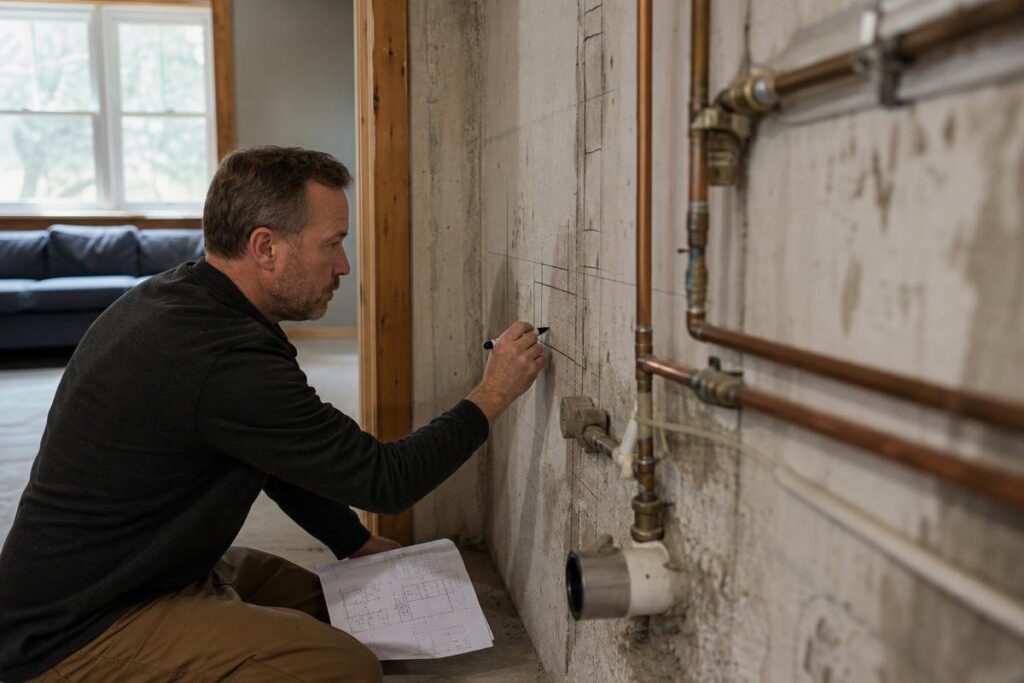
A whole house repiping project sounds disruptive. Most homeowners picture torn-up walls and days without running water. The reality is much more manageable than that. Here is what the process actually looks like.
The Inspection and Estimate
A licensed plumber walks your home before any work starts. We identify what pipe material is currently in the walls, map out the supply runs, and note access challenges specific to your house. Finished basements, tile-walled bathrooms, and second-floor layouts all factor into the plan.
Many homes in the older core neighborhoods still have original galvanized supply lines. We confirm whether a full repipe is warranted or whether targeted section replacement is the better call. That is an honest diagnosis, not a sales pitch. You leave the inspection with a clear estimate and a realistic project timeline.
The Repiping Work Itself
Our team works room by room. We cut small access panels rather than opening entire walls. PEX tubing is flexible, so it can often thread through existing wall cavities with fewer cuts than rigid copper pipe requires.
Your water is shut off during active work. It is restored at the end of each workday. You are not going days without water. Most single-family homes in the metro are fully repiped in two to five days, well within the “all new pipes in under a week” window. If you have been dealing with low water pressure in your home, you will notice the difference quickly once the new lines are live.
Cleanup and Water Restoration
Before we close anything up, every new line is pressure-tested and confirmed leak-free. Access panels are patched after sign-off. We flush and check final water quality before we leave.
If you have questions about hard water and how it affects your plumbing, our team can walk you through material options during the estimate. We are available around the clock for post-installation questions once the project wraps up.
Copper vs. PEX: Which Pipe Material Is Right for Your Home?
Two materials dominate whole house repiping jobs in this region: copper and PEX. Neither is a shortcut. Both are solid choices. The right pick depends on your home’s age, water chemistry, and budget.
Why Many St. Paul Plumbers Now Prefer PEX
PEX is flexible tubing that bends around corners without extra fittings. That matters a lot in older homes with finished walls. Fewer access cuts means less drywall repair after the job.
There is also a water chemistry angle specific to this area. The municipal water supply is treated with chloramines, a disinfectant that can accelerate pinhole corrosion in copper pipe over time. PEX does not corrode the same way, which makes it a practical choice for many homes here. If you have noticed signs of hard water damage already, that is worth factoring in.
PEX also uses color coding, red for hot lines and blue for cold. That makes future service calls faster and easier to diagnose.
When Copper Still Makes Sense
Copper has a 50-plus-year track record. It is rigid, easy to inspect visually, and does not leach chemicals into your water. Some homeowners prefer it for resale perception, and that is a fair consideration.
- Copper works well when walls are already open for other renovations
- Some buyers in higher-end markets associate copper with quality construction
- Copper is easier to inspect during a home inspection
Our plumbing team can walk you through both options based on your home’s specific situation. There is no universal right answer, but there is usually a better fit for your house.
Frequently Asked Questions
How Much Does Whole House Repiping Cost in St. Paul?
Plumbing repiping cost depends on your home’s size, number of bathrooms, pipe material, and the complexity of your supply runs. PEX typically costs less in labor and materials than copper. A small two-bathroom home costs considerably less than a two-story, four-bathroom house with a finished basement. We give you a firm written estimate before any work starts. No surprise invoices.
How Long Does the Project Take?
Most single-family homes in the Twin Cities metro take two to five days. Larger homes or multi-story layouts may run a day or two longer. We restore your water at the end of each workday so your household is not without running water overnight.
Will Repiping Fix My Low Water Pressure?
Often, yes. If your pressure problem comes from internal corrosion or mineral scale narrowing your supply lines, whole house repiping typically restores full flow. If the issue is something else, like a failing pressure regulator, we will tell you that before recommending a full repipe.
Do I Have to Leave My Home During the Work?
No. Most homeowners stay in the house throughout the project. Water is shut off during active work hours and restored each evening. Our team works around your schedule where possible.
Does Homeowners Insurance Cover Repiping?
Standard homeowners insurance does not cover repiping as routine maintenance or wear and tear. It may cover damage caused by a sudden pipe failure, such as water damage to walls or flooring. Check with your insurer directly. A licensed plumber’s written documentation of pipe condition can help support a claim if you have had a failure.
How Can I Tell What Kind of Pipes I Have?
Galvanized steel looks dull gray with orange rust at the joints. Polybutylene is a gray or blue-gray plastic pipe, usually half an inch to one inch in diameter. Homeowners in West Side and Frogtown area bungalows often find galvanized supply lines running through unfinished basements. If you are not sure what you are looking at, we can identify your pipe material during an inspection. Our team is available 24/7 for urgent walk-throughs.
If your home was built before 1980 and you have not had the pipes inspected, schedule a walk-through now. Our team is available around the clock. Reach out or book online and we will identify your pipe material, map your supply runs, and give you a straight answer about whether whole house repiping makes sense for your home. No surprise invoices. Just honest work from a licensed plumbing team that knows this city’s housing stock. McQuillan Home Services LLC is ready when you are.
Ready to Get Started with McQuillan Home Services LLC?
Get in touch to speak with our team directly. We are ready to answer your questions, walk you through your options, and help you find the right solution for your needs. With Minnesota’s next hard freeze never far off, aging supply lines are worth addressing before they fail. Whether you are just starting to plan or ready to move forward, we will make the process simple and stress-free. Reach out today and let’s talk about how we can help.