
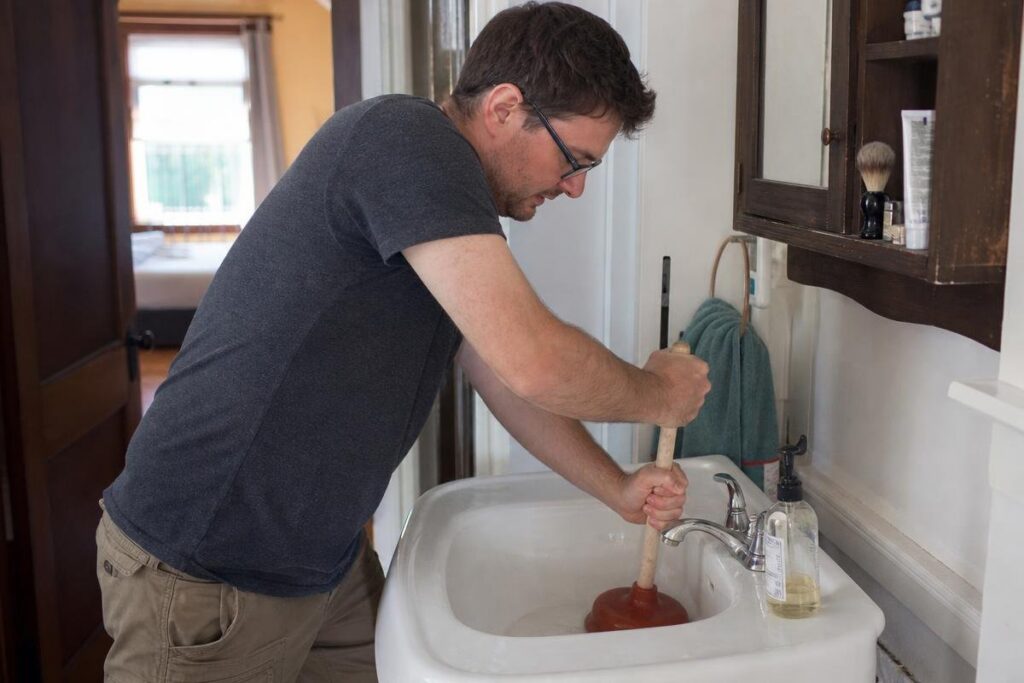
A slow or stopped drain is one of the most common calls we get from St. Paul homeowners, especially in older neighborhoods where cast iron and clay tile lines have been doing their job for 60-plus years. You will find simple, practical methods for how to unclog a drain yourself, and clear signs of when it’s time to stop DIYing and call a pro.
McQuillan Home Services LLC has been serving St. Paul homes for years, and our licensed plumbers are available 24/7 for drain problems that go beyond a plunger and a bottle of vinegar. Drain still blocked after trying everything? We can help today.
Key Takeaways
- Most sink and tub clogs respond to simple DIY fixes like a plunger, a natural fizzing remedy, or a drain snake.
- Knowing how to unclog a drain correctly can save you a service call and prevent pipe damage from harsh chemicals.
- St. Paul’s older cast iron and clay drain lines are more prone to buildup and root intrusion than newer PVC pipes.
- Recurring clogs in the same drain are a warning sign of a deeper blockage that needs professional clearing.
- Our team is available 24/7 for drain emergencies that DIY methods cannot resolve.
Why Your St. Paul Drain Is Slow or Stopped
You turn on the faucet and the water just sits there. The shower drain gurgles. The kitchen sink takes five minutes to empty. It is one of the most common plumbing complaints we hear from St. Paul homeowners, and it is almost always fixable.
Most clogs start small. Hair, soap scum, grease, and food scraps build up over weeks until the drain slows to a crawl. In many cases, you can clear it yourself with tools you already own. The methods that actually work, what to skip, and the warning signs that mean the problem runs deeper than a simple blockage are all covered below.
One thing worth knowing upfront: if your home was built before 1960, you may be dealing with original cast iron or clay tile drain lines. Neighborhoods like Summit Hill and Cathedral Hill have a heavy concentration of pre-war housing. A slow drain in an older home can sometimes point to pipe scale, root intrusion, or deteriorating joints rather than a surface clog. Those warning signs around root intrusion are covered later on.
Why Drains Clog: The Most Common Culprits in St. Paul Homes
Not all clogs are the same. A slow kitchen drain needs a different fix than a backed-up shower. Knowing what caused the clog saves you time and keeps you from making it worse. Here is what we see most often on drain calls around St. Paul.
Kitchen Sink Drains
Grease is the number one kitchen drain killer. It flows down hot and liquid, then cools and solidifies inside the pipe. In older Minnesota homes where drain lines run through exterior walls or unheated crawl spaces, that grease hardens fast, especially in January and February when temps drop below zero. Coffee grounds, food scraps, and soap scum layer on top over time until the pipe is nearly blocked. If your kitchen drain slows down every winter, that is why.
Bathroom Sink, Shower, and Tub Drains
Hair is the main problem in bathroom drains. On its own, a few strands rinse right through. The issue is soap scum. It acts as a binder, clumping loose hair into a dense, water-resistant mat that sits just below the drain cover and barely moves when you run water over it. That is why unclogging a drain in the bathroom can feel like a recurring chore even after you’ve cleaned it last month.
Hard water makes this worse. St. Paul’s water supply draws from the Mississippi River and carries high levels of calcium and magnesium. That mineral load accelerates mineral scale buildup on pipe walls, narrowing the effective diameter over time. If your bathroom sink keeps clogging after you clear it, hard water scale may be contributing to the problem.
Toilets
Most toilet clogs come down to three things: non-flushable wipes, cotton balls, and too much toilet paper at once. “Flushable” wipes are the biggest offender. They do not break down in residential drain lines the way the label implies. They catch on pipe joints, snag debris, and build up fast, especially in pre-war homes where original cast iron lines have rougher interior surfaces.
Stick to toilet paper only. Everything else goes in the trash. Recurring clogs that keep coming back? Schedule a same-day drain cleaning with our St. Paul plumbers.
Step-by-Step: How to Unclog a Drain with Tools You Already Have
To unclog a drain, start with a cup plunger, then move to a hand auger, then finish with hot water, in that order. Most clogs in St. Paul homes clear with tools you already own. Before you call anyone, try these three methods in sequence. They work on bathroom sinks, tub drains, and kitchen drains. If you want to go deeper on other drain clearing techniques, we cover those too. But start here.
Method 1: The Plunger
Grab the right plunger first. A cup plunger has a flat rubber bottom. Use it on sinks and tubs. A flange plunger has an extended rubber lip that folds out. That one is for toilets. Using a toilet plunger on a sink drain breaks the seal and wastes your effort.
- Remove the drain stopper or pop-up assembly.
- Add 2 to 3 inches of water to the basin so the cup seals fully.
- Press the cup firmly over the drain opening. No air gaps.
- Push down and pull up sharply 10 to 15 times without breaking the seal.
- Lift the plunger and run hot water to test the drain.
Repeat the sequence two or three times before moving on. Most soft clogs, soap scum and hair buildup, clear on the first or second round.
Method 2: A Drain Snake (Hand Auger)
A hand auger carries a 15 to 25 foot cable. That reaches past the P-trap and into the branch drain line where most stubborn clogs actually sit. You can rent one at any hardware store for a few dollars.
- Feed the cable tip into the drain opening.
- Crank the handle clockwise while pushing the cable forward.
- Feel for resistance. That is the clog.
- Keep cranking to break up the blockage or hook debris so you can pull it out.
- Withdraw the cable slowly and flush the drain with hot water for 60 seconds.
Hair clogs in bathroom drains almost always come out on the hook. Grease clogs break apart. Either way, the auger does what a plunger cannot reach.
Method 3: Boiling Water for Grease Clogs
Boiling water cuts through grease and soap buildup fast. But there is one hard rule: only use boiling water on metal pipes. Cast iron, copper, and galvanized steel handle the heat fine. Boiling water can soften the solvent-welded joints on PVC drain lines and cause them to fail, which leads to slow leaks inside your walls or under the floor.
Many St. Paul homes have a mix of original cast iron and PVC added during later kitchen or bath remodels. If you do not know your pipe material, use very hot tap water instead. It is not worth the risk.
- Boil a full kettle of water.
- Pour it down the drain in two or three slow stages, about 30 seconds apart.
- Follow with a squirt of dish soap to emulsify any remaining grease.
Pre-1960 homes in areas like Dayton’s Bluff are usually on original cast iron, so boiling water is safe there. When in doubt, default to hot tap water and let it run for a full minute.
How to Unclog a Drain Naturally: Baking Soda and Vinegar
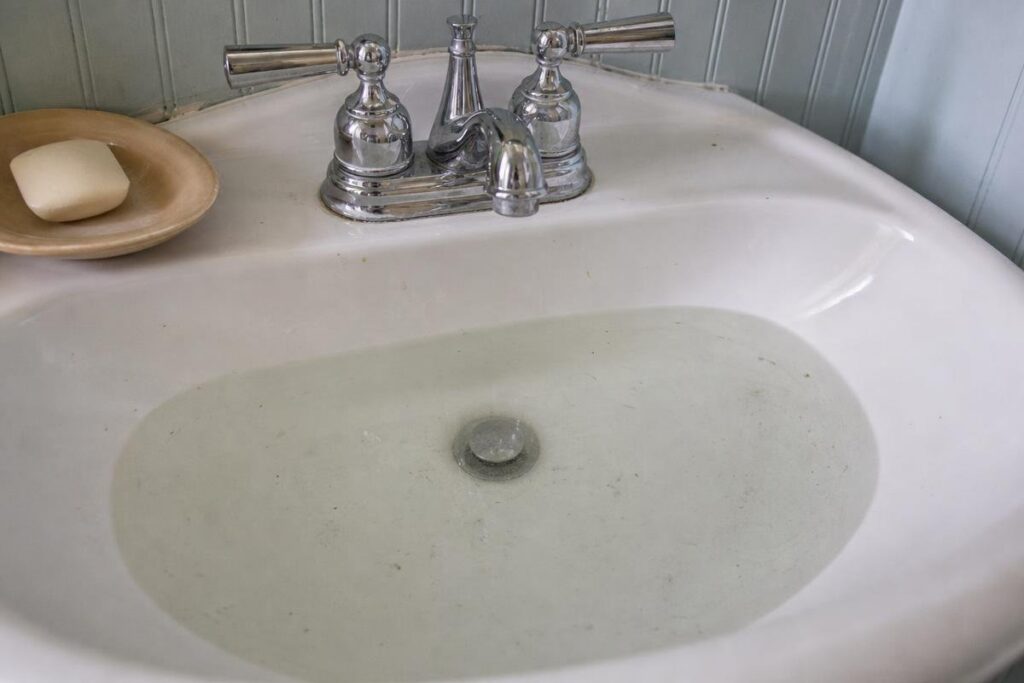
This drain clog home remedy actually works, but only on the right kind of clog. Here is what you need to know before you reach under the sink.
Step-by-Step: The Natural Fizzing Method
- Remove standing water first. The powder needs to reach the drain opening, not dissolve in a sink full of water. Bail or sponge out as much as you can.
- Pour one cup of baking soda directly down the drain. Push it past the drain cover so it actually enters the pipe.
- Follow immediately with one cup of white vinegar. Pour it straight in after the soda.
- Cover the drain with a stopper or a folded rag. This forces the fizzing reaction downward into the pipe instead of back up at you.
- Wait 15 to 20 minutes. Let the reaction do its work.
- Flush with the hottest tap water you have for 2 to 3 minutes. Hot water helps carry loosened debris down and out.
If you want to use this as a monthly preventive habit, one cup of the powder down each drain every month is enough. St. Paul tap water is hard, drawn from the Mississippi River, and that hardness speeds up soap scum buildup inside your pipes. Monthly maintenance is a legitimate habit here, not just a suggestion. If you are seeing other signs of hard water around your home, read about signs your home has hard water and what to do.
What This Method Actually Does (and Where It Falls Short)
The fizzing you see is a carbon dioxide reaction between an acid and a base. It creates mild mechanical agitation inside the pipe. That is enough to break up light soap scum, a fresh grease film, or loose debris sitting near the drain. It is not enough to push through a dense hair mat, a solid grease plug, or mineral scale that has been building up for years.
This natural remedy is safe for every pipe material in a residential home: PVC, copper, cast iron, and galvanized. That matters in older neighborhoods like Frogtown, where pre-1960 cast iron drain lines already have thinned walls from decades of use. Lye-based chemical cleaners can accelerate that deterioration. The fizzing method carries no corrosion risk at all.
Be honest with yourself about what you are dealing with. If the reaction does not clear the drain after one attempt, you likely have a blockage that needs more than a home remedy. For a broader look at your options, see 5 drain cleaning methods homeowners in the area should know. Tried the fizzing trick and the drain is still slow? Our plumbing team can clear it fast, day or night.
What NOT to Pour Down Your Drain: Mistakes That Make Clogs Worse
Some fixes make clogs worse. Chemical drain cleaners and the wrong foods down the drain are the two biggest mistakes we see St. Paul homeowners make. Before you reach for that bottle under the sink, read this first.
Chemical Drain Cleaners: Why We Don’t Recommend Them
Products like Drano use lye or sulfuric acid to dissolve clogs. The chemical reaction generates real heat. That heat can soften PVC joints, corrode cast iron pipe walls, and degrade the rubber gaskets at your drain connections.
In neighborhoods like the West Side, many homes still have original galvanized or cast iron drain lines that are already thinned from decades of use. Repeated chemical treatments accelerate that deterioration. A pipe that was borderline fine can start leaking inside a wall or under a slab.
There is another practical problem. If the chemical does not clear the clog, a plumber now has to work around caustic residue sitting in the line. That is a genuine safety hazard and it adds time and cost to the service call. Safer drain cleaning methods exist that do not put your pipes at risk.
Foods and Substances That Should Never Enter Your Drains
Unclogging a drain is a lot easier when the clog never forms. Keep these out of your kitchen and bathroom drains entirely.
Kitchen drains and disposals:
- Cooking grease and oil. They cool and solidify inside the pipe.
- Coffee grounds. They pack together and do not flush out.
- Eggshells. The membrane wraps around other debris.
- Pasta and rice. Both expand with water and create dense blockages.
- Fibrous vegetables like celery and artichokes. They tangle around disposal blades and catch in pipe joints.
Bathroom drains and toilets:
- “Flushable” wipes. They do not break down in residential lines, regardless of what the label says.
- Cotton swabs. They wedge sideways across pipe walls.
- Dental floss. It tangles around pipe joints and catches every piece of debris that follows.
- Hair. Use a mesh drain cover to intercept it before it enters the pipe at all.
Homes across St. Paul see these issues constantly. Hard water from the Mississippi River already leaves mineral scale on pipe walls. Add grease or hair on top of that scale and you have a clog forming fast.
When a Clogged Drain in St. Paul Means a Bigger Problem
Most slow drains are a nuisance. Some are a warning. Knowing the difference can save you from a flooded basement or a sewage backup in your bathroom. Here is how to tell when your clog is pointing to something more serious than a hairball or soap buildup.
Signs the Problem Is in Your Main Sewer Line
A single slow drain usually means a localized clog. But when multiple drains slow down at the same time, that is a different story. These are the signs that tell us the problem is in your main sewer line, not an individual fixture:
- Two or more drains are slow or backing up at the same time
- Your toilet gurgles when you run the bathroom sink
- Water backs up into the tub or shower when you flush the toilet
- A sewage smell is rising from floor drains in the basement
Any one of these is a signal to stop plunging and call a plumber. Knowing when to call a plumber for a clogged drain is just as important as knowing how to clear one. DIY tools will not fix a main line problem. They can make it worse. Multiple drains backing up at once? Call our St. Paul plumbers now for 24/7 emergency service.
Older Pipes and Tree Roots: A St. Paul Reality
Neighborhoods like Hamline-Midway and the Payne-Phalen area have a high concentration of homes built between 1900 and 1960. Many of those homes still have original clay tile sewer laterals connecting the house to the city main. Clay tile joints are the primary entry point for tree roots.
The urban tree canopy in these older neighborhoods is beautiful. It is also aggressive. Elm, oak, and silver maple all have root systems that follow moisture directly into clay pipe joints. Once roots get in, they expand. A plunger or hand snake will not solve root intrusion. The roots grow back fast after mechanical removal unless the line is treated or replaced.
A camera inspection is the only reliable way to confirm what is actually happening underground. Contact our team for a camera inspection to understand your options.
Minnesota winters add another layer of stress. Temperatures regularly drop below 0°F in January and February. Those freeze-thaw cycles crack older clay and cast iron pipe joints over time. Each new crack is another entry point for roots and another step toward a partial pipe collapse. If your home was built before 1960 and you have never had a sewer camera inspection, it is worth scheduling one before a slow drain turns into a full backup.
Frequently Asked Questions
Is boiling water safe to pour down a clogged drain?
It depends on your pipes. Boiling water works well on metal pipes like cast iron, copper, and galvanized steel, especially for fresh grease or soap clogs. If your home has PVC drainpipes, use the hottest water from your tap instead. Boiling water can soften the solvent-welded joints on PVC and cause leaks over time.
Should I remove standing water before using a plunger or a natural remedy?
Yes. Scoop out as much standing water as you can with a cup or small bucket first. You need direct access to the drain opening for a plunger to build proper suction, and the fizzing method needs to reach the clog directly, not dilute into a pool of water.
Is the baking soda and vinegar method safe for all pipe types?
Yes. The reaction is safe for PVC, cast iron, copper, and galvanized pipes. It is the lye-based chemical drain cleaners that corrode older pipe materials. Many St. Paul homes still have original cast iron lines, so this matters. Stick with the natural method if you are not sure what your pipes are made of.
How do I know if my clog is in one drain or the main sewer line?
One slow drain usually means a localized clog. If two or more drains are slow at the same time, or water backs up into your tub when you flush the toilet, that points to the main sewer line. Homes in older neighborhoods with clay tile laterals are especially vulnerable. Root intrusion in clay laterals is the most common underlying cause in homes built before 1960, and it requires a camera inspection to confirm.
When should I stop trying DIY and call a plumber?
Stop after two or three rounds with a plunger and snake if the drain still will not clear. Also call if you smell sewage, if multiple drains are affected, or if your home has a history of root intrusion. Knowing the right method for your situation can save you time before you call. Our team offers 24/7 emergency service for serious backups across the St. Paul area.
How much does professional drain clearing cost in St. Paul?
The final cost depends on what the job actually needs. Standard drain snaking, hydro jetting, and sewer camera inspection are all priced differently. We diagnose the problem first and give you a clear estimate before any work begins. No guesswork, no surprise charges.
If you have worked through every step in this guide and the drain still will not clear, or if you are seeing any of the main sewer line warning signs, it is time to call a licensed plumber. McQuillan Home Services LLC serves St. Paul and the surrounding metro with same-day and 24/7 emergency drain and sewer service. Reach out online or visit our office. We will find the problem, give you a straight estimate, and fix it right the first time.
Ready to Get Started with McQuillan Home Services LLC?
Get in touch to speak with our team directly. We’re ready to answer your questions, walk you through your options, and help you find the right solution for your needs. Whether you’re just starting to plan or ready to move forward, we’ll make the process simple and stress-free. Reach out today and let’s talk about how we can help.