Emergencies can happen at any time – when you call us outside of normal business hours, our customer service reps will answer questions on service availability & pricing and will direct you to same-day emergencies services.
How to Prevent Frozen Pipes in St. Paul Homes This Winter
June 2, 2026
St. Paul winters don’t mess around. When temps drop below zero, unprotected pipes can freeze in a few hours and burst within a day. We’re McQuillan Home Services, your neighbors out of 1727 HWY 36 E, and we’ve been helping Twin Cities homeowners prevent frozen pipes for generations. This guide covers the simple steps that actually work in Minnesota cold, plus the warning signs that tell you it’s time to call a plumber before a small freeze turns into a flooded basement.
Pipes already cold to the touch? Don’t wait for the burst. Call us 24/7 at (651) 212-5828.
Key Takeaways
Keep your thermostat at 55°F or higher, even when traveling, to help prevent frozen pipes during St. Paul cold snaps.
Let a pencil-thin stream of water drip from faucets on exterior walls when temps dip below zero.
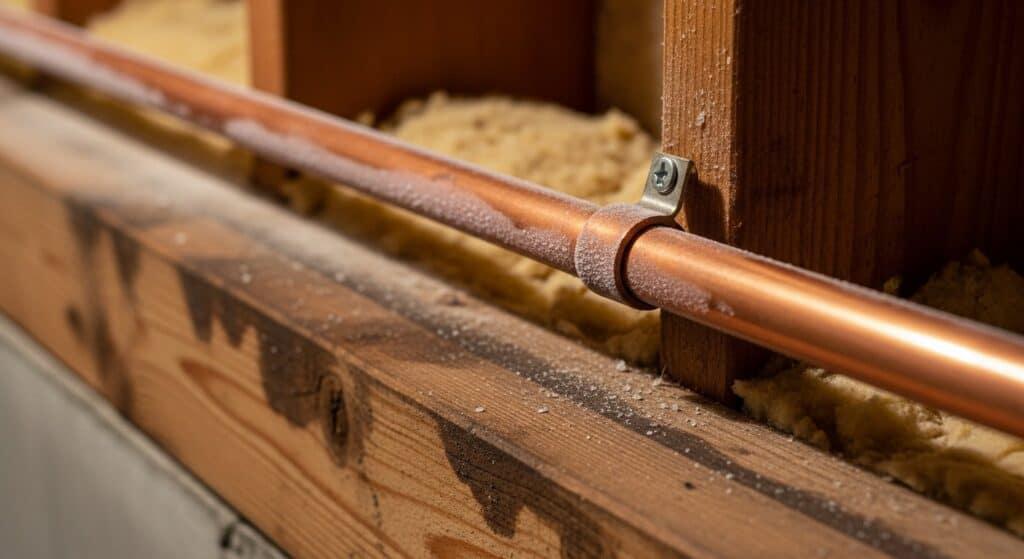
Insulate pipes in crawl spaces, garages, and attics with foam sleeves or UL-listed heat tape.
Disconnect outdoor hoses every fall and shut off the interior valve to the hose bib.
If a pipe bursts, shut off the main water valve immediately and call a licensed plumber.
Why Frozen Pipes Are a Real Threat in St. Paul Winters
January in the Twin Cities is brutal. Lows routinely drop to -10°F to -20°F, and we get around 54 inches of snow every winter. That kind of cold doesn’t just inconvenience your pipes, it breaks them.
Here’s the physics: water expands about 9% when it freezes. That pressure splits copper, cracks PVC, and bursts galvanized steel. A crack as small as 1/8 inch can dump 250 gallons of water a day into your home. We’ve seen that turn into serious damage before the homeowner even knew there was a leak.
St. Paul’s older housing stock makes it worse. Bungalows in Highland Park, story-and-a-halfs in Como, and the attached garages common across Maplewood and Roseville all have weak spots where pipes run through uninsulated walls or cold rim joists. We work on these houses every day from our shop at 1727 HWY 36 E.
This guide walks you through frozen pipe prevention Minnesota homeowners actually need: where pipes freeze first, what to do before winter hits, how to handle a cold snap, and when to call a plumber.
Why St. Paul Homes Are Especially Vulnerable to Frozen Pipes
Twin Cities housing is older than most of the country, and that matters when the temperature drops. A big share of homes in neighborhoods like Frogtown, Payne-Phalen, and the West Side were built before 1960, back when nobody insulated rim joists or thought twice about running copper along an exterior wall. That’s why frozen pipe prevention in Minnesota looks different here than it does in a 2010-build out in Woodbury or Lakeville.
The Age of St. Paul’s Housing Stock
The classic Twin Cities bungalow and rambler is a beautiful house. It is also a freezing-pipe magnet. Older homes typically lack modern vapor barriers, spray foam at the rim joist, and properly sealed wall cavities. Cold air finds its way in through gaps you can’t see, and it pools right where your water lines run.
That’s why DIY prevention matters more here than in newer construction. The building envelope is doing less of the work for you, so you have to do more of it yourself. If your home was built before the Kennedy administration, assume your plumbing has cold-weather weak spots.
How Minnesota Cold Actually Freezes a Pipe
Pipes start to freeze when sustained outdoor temperatures drop below about 20°F, especially with wind. St. Paul averages 50-plus days below that threshold each winter. That is a long stretch of opportunity for trouble.
Here is the part most people don’t read about: water expands roughly 9% when it freezes. The expansion is what splits the pipe, not the ice itself. Once it thaws, even a 1/8-inch crack can release around 250 gallons of water per day into your walls, ceilings, and floors. That is why the same cold snaps that hammer the grid also keep our team busy on heating calls. If your furnace is also struggling, our notes on heating maintenance during extreme cold are worth a read before the next deep freeze.
The Pipes That Freeze First in Twin Cities Homes
Not every pipe in your house is at equal risk. Walk through and check these in order:
Exterior wall runs, especially kitchen and bathroom supply lines on north-facing walls.
Attached garage walls where plumbing crosses an unheated space.
Rim joist cavities in the basement, where copper meets cold foundation block.
Under-sink cabinets on exterior walls, where cabinet doors trap warm air out.
Hose bibs and outdoor spigots, including the line feeding them.
Crawl spaces and attic runs, anywhere a pipe sits outside the heated envelope.
Start at the top of that list and work down. That ranking is based on what we actually pull out of frozen walls every January.
Your Pre-Winter Pipe Protection Checklist for St. Paul
Work through this list in early October, before the first hard freeze. Most of it takes one Saturday. The goal is simple: stop cold air from reaching your pipes, and stop standing water from sitting in places it can freeze.
Insulate Exposed Pipes Before the First Hard Freeze
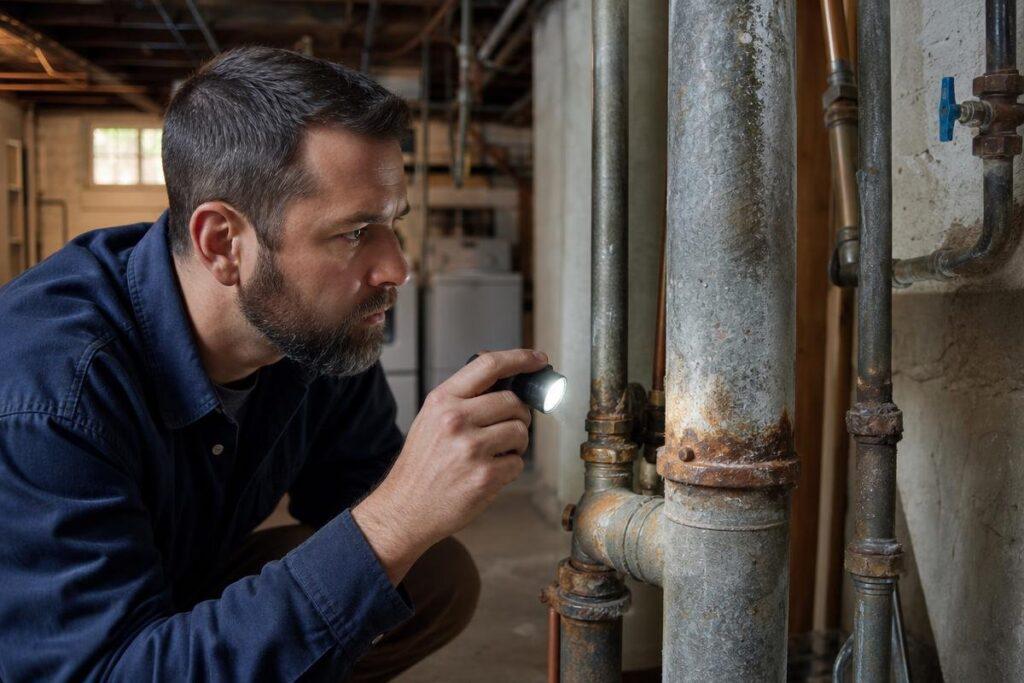
Walk your basement, garage, and crawl space with a flashlight. Mark every pipe that runs along an exterior wall or through the rim joist. Those are your priority.
For most homes in Maplewood, Roseville, and the older St. Paul neighborhoods, polyethylene or neoprene foam pipe sleeves do the job. They run about $0.50 to $2 per linear foot at any hardware store. Get the right inside diameter for your pipe (1/2 inch and 3/4 inch covers most residential lines). Slit side goes against the pipe. Seal the seam and every joint with foil tape, not duct tape. Duct tape fails in the cold.
For pipes in unheated garage walls or shallow crawl spaces, foam alone is not enough. That’s when you add heat tape, also called pipe heating cable. Buy a UL-listed product rated for the pipe material you have (copper, PEX, or PVC). Wrap it per the instructions, plug it into a GFCI outlet, and inspect it every fall for cracked insulation or fraying before you energize it. Old heat tape is a fire risk. Replace it every 3 to 5 years.
One more thing on heat tape for pipes: do not bury it under thick foam unless the manufacturer says so. Some cables need airflow to shed heat safely. Read the box.
Seal Air Leaks Around Rim Joists and Exterior Penetrations
Cold air sneaks in where you can’t see it. The rim joist, that band of wood at the top of your foundation, is the worst offender. Older basements around the West Side and Highland Park usually have the cavities wide open and easy to inspect.
Grab a flashlight on a cold October morning and look for daylight, cobwebs moving, or frost. Then seal:
Gaps under 1/4 inch: paintable silicone or acrylic caulk
Larger gaps and pipe penetrations: low-expansion spray foam
Whole rim joist bays: cut rigid foam board to fit, then foam the edges
Also seal where the water service, gas line, cable, and dryer vent pass through the foundation. If your slow drains have been bugging you, our team covers what causes them in this guide to hidden drain issues.
Disconnect and Drain Outdoor Hose Bibs
Do this before late October. Overnight lows hit freezing fast in the Twin Cities.
Unscrew every garden hose. Drain and store it.
Find the interior shutoff valve for that hose bib (usually in the basement ceiling near the exterior wall). Close it.
Go outside. Open the outdoor faucet fully and let it drain.
Leave the outdoor handle open all winter.
Back inside, open the small bleeder cap on the shutoff valve to drain trapped water into a bucket.
Have a frost-free sillcock? It only self-drains if no hose is attached. A connected hose traps water in the long stem and the pipe splits behind the wall. We see that repair every January.
What to Do During a Cold Snap: Temperature Thresholds and Indoor Tactics
When the forecast shows sub-zero lows for several nights in a row, your prep work matters less than what you do right now. Twin Cities Januaries and Februaries routinely push wind chills to 30 below. At that point, every degree inside your house and every inch of insulation between a pipe and the cold is doing real work.
Keep Your Thermostat Above 55°F Even When You’re Away
Set your thermostat no lower than 55°F when you travel in winter. That’s the floor, not the goal. The few dollars you save dropping it to 45°F won’t come close to covering a costly burst-pipe repair and the water damage that follows.
Leaving for more than a day or two? Ask a neighbor to check the house. If you lose heat in Maplewood or Roseville during a cold snap, you’ve got hours, not days, before pipes start freezing. Our team also handles heating maintenance for extreme cold so your furnace actually holds temperature when it’s 20 below.
When to Open Cabinet Doors and Let Faucets Drip
Yes, dripping a faucet works, but only as a reactive measure for extreme cold. When outdoor temps drop below 0°F, do this:
Open cabinet doors under sinks on exterior walls so warm air can reach the supply lines.
Pick the faucet farthest from where your water enters the house. Let it trickle, not stream. Pencil-lead thin is enough.
Run both hot and cold so both lines stay moving.
Moving water freezes at a lower temperature than still water. That’s the whole reason this works. Skip it on a normal 20°F night, it’s not a nightly habit.
If a faucet suddenly runs dry during a cold snap, you likely already have a frozen pipe. Do not use a torch, propane heater, or any open flame. That’s how house fires start. Open the cabinet, aim a hair dryer at the exposed pipe, and call a licensed plumber. For frozen pipe burst repair in Twin Cities homes, fast diagnosis matters more than DIY heroics.
Using a Space Heater Safely in Vulnerable Areas
Attached garages on local bungalows and ramblers are a common freeze point, especially where the hose bib or laundry line runs along the shared wall. A space heater can buy you a night, but follow these rules:
Keep it at least 3 feet from anything that burns: cardboard boxes, gas cans, paint cans, the car.
Plug directly into a wall outlet. Never an extension cord or power strip.
Never leave it running while you sleep or leave the house.
If you’re constantly babysitting a garage or crawl space with a space heater every January, the real fix is rerouting or insulating that line. Our licensed plumbers can walk the space and tell you what’s worth doing.
Spot pipes you can’t reach, hear water running where it shouldn’t, or want a pro to check your rim joists and garage lines before the next cold snap?
Call our team at (651) 212-5828. We’re based at 1727 HWY 36 E in the 55109 area and serve homeowners across the east metro. We’ll walk your home, point out the freeze risks, and fix them before they turn into a flooded basement.
Frequently Asked Questions
How Much Does It Cost to Repair a Burst Pipe in St. Paul?
Pipe burst repair costs in the St. Paul area vary depending on the pipe location, material, and extent of water damage. Pipes hidden inside walls or under slabs cost significantly more to access and repair. McQuillan Home Services can provide an honest estimate after assessing the damage, and acting quickly limits secondary costs like drywall replacement or mold remediation.
Will Homeowners Insurance Cover Frozen Pipe Damage?
Most standard homeowners insurance policies cover sudden and accidental damage from a burst frozen pipe, but they typically exclude damage caused by neglect. If an adjuster determines you left the heat off or ignored known vulnerabilities, your claim may be denied. Keeping records of thermostat settings, insulation upgrades, and professional inspections can support your claim if a loss does occur.
Can Pipes Freeze Even When the Heat Is On?
Yes, pipes in poorly insulated spaces like attached garages, crawl spaces, and rim joist cavities can freeze even when interior temperatures are comfortable. The heat inside your living areas does not always reach these perimeter zones, especially in older St. Paul homes with minimal insulation. A professional assessment from McQuillan Home Services can identify cold spots that a thermostat setting alone will not protect.
How Long Does It Take a Frozen Pipe to Burst?
A pipe does not burst the moment it freezes. Ice builds pressure gradually, and a pipe can remain intact for several hours or even days before it fails, sometimes bursting after the thaw begins rather than during the freeze. This delayed failure catches many homeowners off guard, so it is important to call a plumber as soon as you suspect a pipe has frozen rather than waiting to see if it thaws on its own.
Is It Safe to Thaw a Frozen Pipe Yourself?
You can safely thaw an exposed, accessible pipe using a hair dryer or warm towels, working from the faucet end toward the blockage and never using an open flame. However, if the frozen section is inside a wall, ceiling, or floor, or if you cannot locate it, attempting a DIY thaw risks missing a crack that is already present. McQuillan Home Services recommends calling a licensed plumber in those cases to avoid turning a frozen pipe into a flooded room.
Should I Drain My Entire Plumbing System If I Leave for an Extended Winter Trip?
Draining the plumbing system is the most reliable way to prevent frozen pipe damage during a long absence, particularly if you plan to shut off the heat entirely. The process involves turning off the main water supply and opening every fixture to release residual water, including flushing toilets and draining the water heater. McQuillan Home Services can perform a full winterization to make sure no water remains trapped in supply lines, traps, or appliance connections.
Do Pipe Heating Cables Actually Work, and Are They Worth the Cost?
Electric heat cables are a proven solution for pipes in chronically cold zones like unheated crawl spaces or exterior garage walls, and many St. Paul homeowners rely on them as a last line of defense. Self-regulating cables are the safest option because they adjust their heat output based on surrounding temperatures, reducing fire risk and energy waste. The upfront cost is modest, typically $30 to $100 for most residential runs, and McQuillan Home Services can install them properly to meet code and ensure they are connected to a protected circuit.
Ready to Get Started? McQuillan Home Services Has You Covered
Ready to book with McQuillan Home Services? Or call (651) 212-5828 to speak with our team directly.