
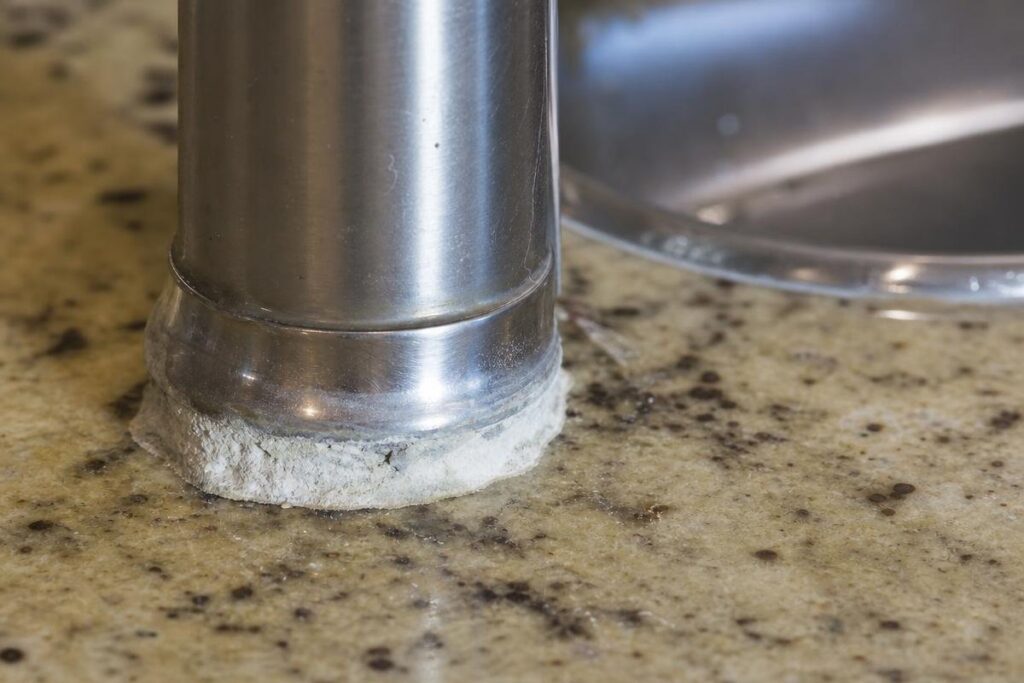
St. Paul’s municipal water ranks among the hardest in Minnesota, regularly testing at 15 to 25 grains per gallon depending on the season and source blend. That level of hardness leaves a trail of hard water signs all over your home, from crusty faucets to failing water heaters, and most homeowners don’t connect the dots until something breaks.
McQuillan Home Services LLC has served St. Paul homes with licensed Minnesota plumbers and knows exactly what that mineral load does to pipes, fixtures, and appliances in older homes across the city. Seeing scale buildup, soap scum, or spotty dishes? Schedule a free water hardness test and find out what’s really in your pipes.
Key Takeaways
- St. Paul water hardness typically runs 15 to 25 grains per gallon, placing it in the “very hard” classification most of the year.
- Common hard water signs include white scale on faucets, soap scum buildup, stiff laundry, and spotty dishes after washing.
- Hard water accelerates wear on water heaters, pipes, and appliances, shortening their useful life significantly.
- A water softener or whole-home filtration system can protect your plumbing and reduce cleaning time throughout your home.
- Older St. Paul homes with galvanized pipes are especially vulnerable to scale buildup and corrosion from hard water.
How to Read the Signs Before They Cost You

Hard water leaves a trail. Soap scum on your shower walls, spots on your dishes, dry skin after a shower, and scale clogging your faucets are the most visible symptoms. Below are 9 specific signs your water is already doing damage, why each one matters, and what you can do about it. Read through and check how many you recognize.
What Makes St. Paul Water So Hard?
Where St. Paul’s Hardness Comes From
St. Paul water is hard because it draws from the Mississippi River and deep limestone aquifers that dissolve calcium and magnesium into the supply before it reaches your tap. The municipal system pulls from the river and from two deep aquifer formations, the Jordan and the Prairie du Chien, both of which move through layers of limestone and dolomite bedrock. That bedrock releases minerals directly into the water as it travels. By the time it reaches homes in Frogtown or the North End, it is already heavily loaded.
Saint Paul Regional Water Services publishes annual water quality reports that confirm this. Hardness levels shift depending on the season and which source is blended into the supply, but they land consistently in very hard territory for most of the year.
How Hard Is Too Hard? The GPG Scale Explained
Grains per gallon (gpg) is the standard measure for water hardness. Here is how the scale breaks down:
- Soft: 0 to 3 gpg
- Moderately Hard: 4 to 10 gpg
- Hard to Very Hard: 11 gpg and above
Most Minnesota cities clock in above 14 gpg for much of the year. That is well past the threshold where you start seeing limescale buildup on faucets, soap scum on fixtures, and real damage to water-using appliances. If your home is showing those signs, water softener installation is the standard fix.
The 9 Hard Water Signs St. Paul Homeowners See Most
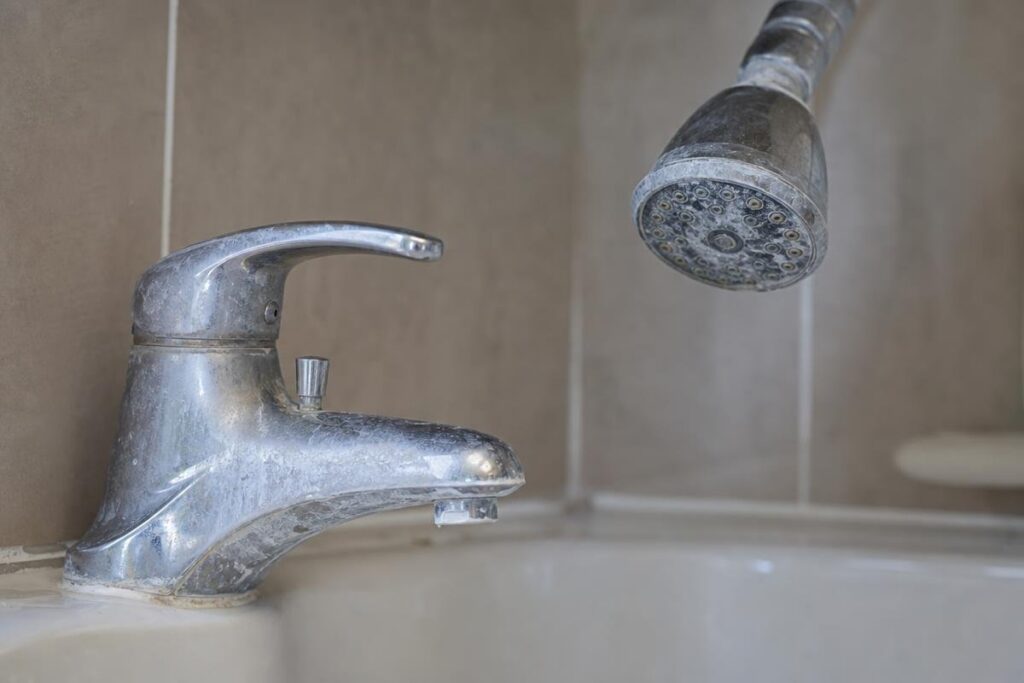
Because those same 15 to 25 gpg readings sit near the top of the metro’s range, these signs show up faster here than in softer-water cities. Check your home against this list.
1. White or Yellow Scale on Faucets and Showerheads
You see a crusty white or yellowish coating around the base of your faucets and showerhead holes. That is calcium carbonate precipitating out of hot water and hardening on metal surfaces as limescale. Descaling with vinegar removes it temporarily, but water treatment stops it from coming back.
2. Stubborn Soap Scum That Won’t Wipe Away
Your shower walls and tub feel filmy no matter how often you clean them. Hard water minerals react with soap to form calcium stearate, an insoluble curd that clings to surfaces instead of rinsing away. You end up using more soap and still never feel like things are truly clean.
3. Spots and Haze on Dishes After the Dishwasher
Glasses come out of a full wash cycle cloudy, and plates show white spots. Calcium and magnesium leave deposits behind as water evaporates inside the dishwasher. If your rinse aid is not keeping up, the hardness level is likely the real problem.
4. Dry Skin and Dull, Rough Hair
Your skin feels tight after a shower and your hair looks flat no matter what products you use. Mineral ions block soap and shampoo from rinsing cleanly, and calcium absorbs into hair cuticles making strands rough and dull. Switching shampoo will not fix a water problem.
5. Stiff, Scratchy Laundry and Faded Colors
Towels feel like sandpaper after washing and dark clothes fade faster than they should. Hard water minerals bond with detergent before it can do its job, leaving mineral residue in fabric fibers. Colors break down faster and fabrics wear out sooner than their expected lifespan.
6. Dropping Water Pressure Throughout the House
You notice weaker flow at multiple fixtures, not just one. Over years, limescale narrows the inside of supply pipes and restricts flow the same way plaque narrows an artery. Low water pressure across multiple fixtures often points to scale buildup narrowing your supply lines over time. Hard water damage to pipes is a real and costly problem if left alone.
7. Popping or Rumbling Sounds From the Water Heater
You hear banging or rumbling when the burner kicks on. Calcium carbonate sediment settles on the tank floor, and water trapped under that layer superheats and pops when the burner fires. That noise is shortening your water heater’s life every time you hear it.
8. Metallic or Chalky Taste and Rust-Colored Water
Your drinking water tastes off, either metallic or chalky, and sometimes runs slightly orange or brown. High mineral content changes the taste of tap water, and rust-colored water can signal that scale has damaged a pipe or fitting. This is one of the more direct signs homeowners notice right away, and it warrants a closer look at the pipe itself.
9. Appliances Wearing Out Faster Than They Should
Your water heater, dishwasher, or washing machine fails years before its rated lifespan. Water Quality Research Foundation data shows water heaters on hard water can lose up to 48 percent efficiency over time, with heating elements and valves in other appliances suffering similar accelerated wear. At that hardness level, homes across the metro are running appliances hard every single day.
Recognize three or more of these signs? Get a water softener quote sized for your St. Paul home.
Why Ignoring Hard Water Costs St. Paul Homeowners More Over Time
Pipe Damage and Reduced Flow
Hard water damage to pipes is gradual, but it compounds. Scale builds up inside copper and galvanized steel supply lines year after year. Older neighborhoods with high concentrations of pre-1970 galvanized pipe are hit hardest, because that rough interior surface gives scale more grip than modern copper. The result is narrowing flow, dropping pressure, and eventually a pipe that needs full replacement. If you are already seeing falling pressure across multiple fixtures, scale buildup inside your supply lines is often part of the problem.
Water Heater Efficiency Loss
Scale acts as insulation between the burner and the water. A quarter-inch of buildup forces your water heater to run significantly longer to reach temperature. That translates directly to higher monthly gas or electric bills. Heating elements and valves also wear out faster when they are coated in mineral deposits, which means repair bills on top of utility costs. Hard water in St. Paul, MN shortens water heater life in a way most homeowners do not connect to their water supply until the damage is done.
Hidden Costs That Add Up Quietly
Hard water homeowners use 50 to 75 percent more soap and detergent trying to get a decent lather. Dish soap, laundry detergent, shampoo, and cleaning products all go faster. Dishwashers and washing machines take on scale damage to their heating elements and internal valves over time. A water softener in a home with very hard water typically pays for itself within a few years when you factor in lower utility bills, fewer appliance repairs, and less product waste. Treating the water is almost always cheaper than replacing what the water ruins.
How to Confirm You Have Hard Water in St. Paul
Spotting the signs is one thing. Confirming hardness with an actual measurement tells you how bad the problem is. You have three options, ranging from free to professional. Most homeowners start with a quick DIY check, then move to a test kit or a plumber visit if they want a real number.
The DIY Soap Test
You can test your water right now without buying anything. Fill a clear plastic bottle about one-third full with tap water. Add five or six drops of pure liquid castile soap, cap the bottle, and shake it hard for about 30 seconds. If you get minimal lather and the water looks milky or cloudy, your water is hard. Soft water produces big, soapy suds and stays clear. This test costs nothing and takes under a minute.
Home Test Kits
Test strips give you an actual hardness number. Brands like JNW Direct and API measure hardness in grains per gallon (gpg) or mg/L. Dip a strip, wait 60 seconds, and compare the color to the chart on the package. Above 7 gpg is considered hard, and above 14 gpg is very hard. Given the readings the local supply produces, most homeowners land well into that very hard category.
Professional Water Quality Assessment
A home strip tells you your hardness level. A licensed plumber tells you what that hardness has already done to your pipes and water heater. If you are also dealing with low water pressure, scale buildup inside your pipes may already be restricting flow.
Our team can test your water and inspect for existing damage in the same visit, which saves time and catches problems before they get expensive. Not sure how hard your water is? We can test it and check your pipes at the same time.
What to Do When You Spot Hard Water Signs in Your Home
Once you confirm hard water signs in your home, the fix depends on how far the problem has spread. That hardness level puts your pipes, appliances, and fixtures under real stress year-round. Here is what actually works.
Water Softener Installation
A whole-home ion-exchange water softener is the most direct solution for hardness at this level. It swaps calcium and magnesium ions for sodium ions before water reaches any fixture, pipe, or appliance. That directly addresses limescale buildup on faucets, soap scum, spotty dishes, dry skin, and the appliance wear covered in earlier sections. Sizing matters: a softener sized for a 2-person household will not keep up in a larger home with high daily water use, so our team sizes every system to your actual flow and hardness reading.
Older homes in the East Side and Frogtown sometimes need pipe work done before or alongside softener installation. Galvanized lines that have been scaling for decades may have flow issues a softener alone will not fix.
Whole-Home Filtration vs. Point-of-Use Filters
This is a common question. A whole-home system treats every tap and protects your pipes and water heater. A point-of-use filter, like an under-sink reverse osmosis unit, only treats drinking water at that single tap. It does nothing for your pipes, your water heater, or your shower. If your main concern is drinking water taste and quality, an RO system works well alongside a softener. If you only install a point-of-use filter, your plumbing and appliances stay unprotected.
Descaling Pipes and Protecting Your Water Heater
Installing a softener stops new scale from forming. It does not remove scale that is already there. Annual water heater tank flushing clears sediment that has built up and helps restore efficiency. For pipes with heavy buildup that is restricting flow, hydro jetting may be needed to restore normal pressure.
A licensed plumber can assess which descaling approach fits your pipe condition and situation. If you need help deciding where to start, contact our plumbing team for an assessment.
Hard Water and Older St. Paul Homes: What to Watch For
Older homes in this city carry a specific risk that newer construction doesn’t. If your house was built before 1970, there’s a good chance it still has galvanized steel supply lines. Hard water accelerates the damage to those pipes faster than most homeowners expect.
Pre-1970 Homes and Galvanized Pipe Risk
Galvanized pipe corrodes from the inside out. As the interior rusts, mineral scale from hard water bonds directly to that corroded surface. The buildup narrows the pipe over time, restricting flow and trapping sediment. The result is a pipe that looks fine on the outside but is nearly choked shut inside.
The first signals are usually falling pressure at multiple fixtures or water that runs brown or orange when you first turn on a faucet. Both mean the pipe interior is already compromised, and the hard water running through these lines speeds up that corrosion cycle significantly.
If you see either of those symptoms in a pre-1970 home, don’t wait. Galvanized pipe failure can go from slow pressure to a burst line without much warning.
Neighborhoods Where Hard Water Damage Shows Up Most
Our team sees the heaviest galvanized pipe and hard water damage combination in neighborhoods with dense pre-1970 housing stock. That includes:
- Thomas-Dale
- Dayton’s Bluff
- Payne-Phalen
- The North End
Zip codes 55104, 55107, 55106, and 55117 cover most of this housing. We work in these areas regularly and know what the plumbing conditions look like inside those walls. Hard water signs in these homes often point to a pipe problem that’s already years in the making.
Frequently Asked Questions
How hard is St. Paul’s tap water?
The local municipal supply typically tests between 15 and 25 grains per gallon. The Water Quality Association classifies anything above 14 gpg as very hard. Most homes in the area fall into that very hard category for most of the year, which is on the higher end compared to other metro systems in the region.
Can hard water make you sick?
No. Calcium and magnesium are naturally occurring minerals and are not harmful to drink. If your water has a metallic taste or a rust-colored tint, that is a separate issue worth investigating. It often points to pipe corrosion rather than hardness, and a plumber should take a look.
How much does a water softener cost in St. Paul?
A whole-home softener installation varies in price depending on your household size, water hardness, and whether any pipe work is needed. We provide upfront estimates before any work begins, so you know the cost before we start.
Will a water softener fix low water pressure caused by scale?
A softener stops future scale from forming, but it does not remove deposits that are already inside your pipes. If scale buildup has narrowed your lines, a plumber may need to descale or replace affected sections first. Our team can assess what is contributing to pressure loss during an inspection.
How long does water softener installation take?
Most installations take 2 to 4 hours for a licensed plumber. Your water supply will be shut off briefly during the work. We offer flexible scheduling so the job fits your day, not the other way around.
Does McQuillan Home Services LLC install water softeners in St. Paul?
Yes. McQuillan Home Services LLC installs water softeners throughout the area and handles everything, including sizing, installation, and any pipe work your system needs. Our team has earned over 5,000 customer reviews with a 4.6-star average rating.
If you are seeing any hard water signs in your home, the fix starts with a single call. Our licensed plumbers test your water, inspect your pipes and water heater, and size a whole-home softener to your household’s actual needs. Reach out or schedule online today.
Ready to Get Started with McQuillan Home Services LLC?
Get in touch to speak with our team directly. We’re ready to answer your questions, walk you through your options, and help you find the right solution for your needs. Whether you’re just starting to plan or ready to move forward, we’ll make the process simple and stress-free.
Reach out today and let’s talk about how we can help.